
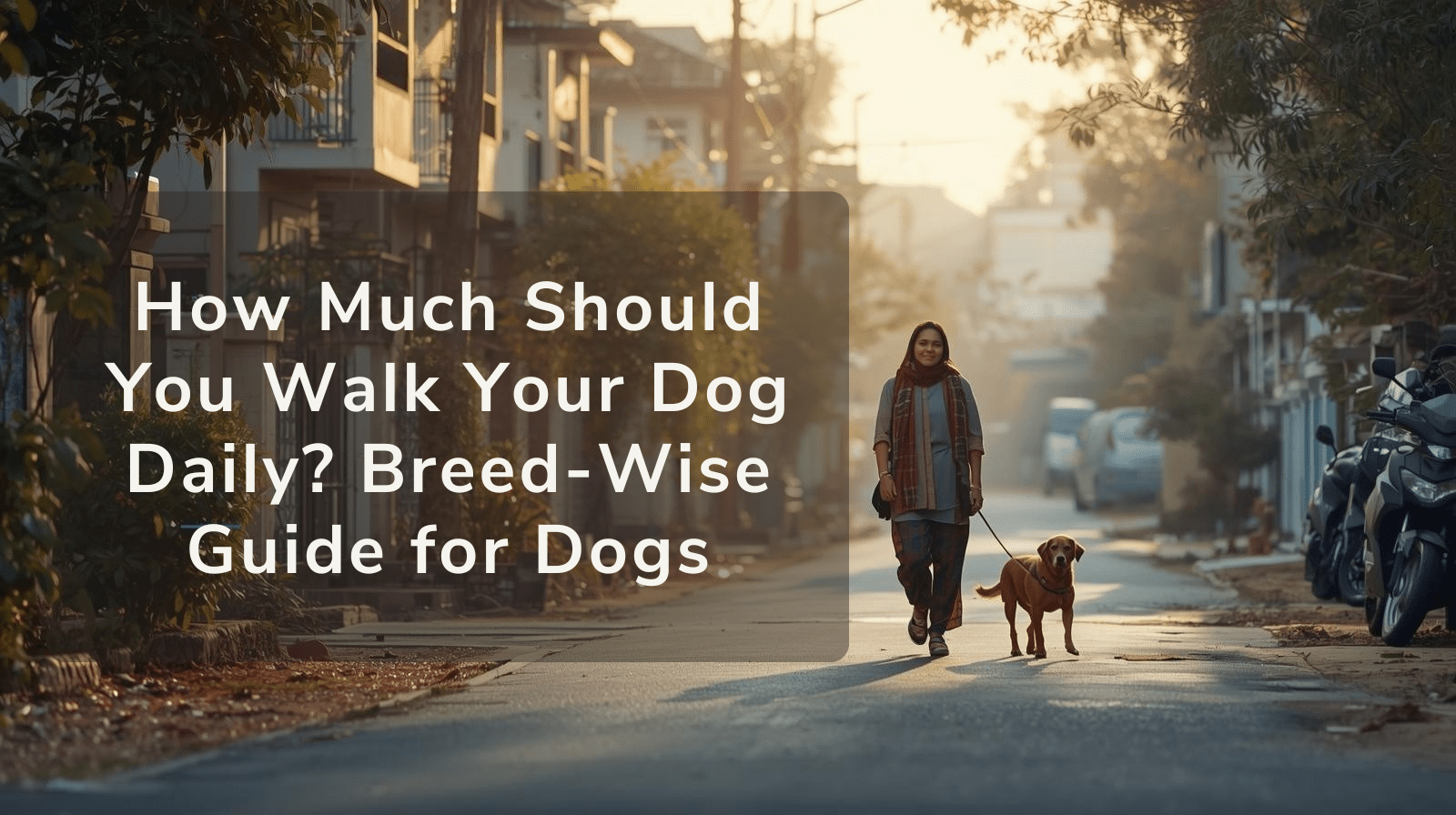
Most Indian dogs today are either over-walked or under-walked — and both are silently harming their health.
Some dogs are forced into long walks despite joint pain. Others barely step outside, leading to obesity, anxiety, and behavioural issues. The truth is simple but often misunderstood:
There is no “one-size-fits-all” walking rule for dogs.
This guide breaks down how much you should walk your dog daily based on breed, age, lifestyle, and Indian living conditions — so you can keep your dog fit, calm, and healthy without causing damage.
Why Daily Walks Are Critical for Dogs (Beyond Just Exercise)
Walking is not just about burning calories. For dogs, daily walks support:
- ✔ Joint mobility and muscle strength
- ✔ Digestive health and bowel regularity
- ✔ Mental stimulation and stress reduction
- ✔ Behaviour control (less barking, chewing, aggression)
- ✔ Socialisation with people, dogs, and environments
However, incorrect walking routines can lead to:
- ❌ Early arthritis
- ❌ Ligament injuries
- ❌ Heat or cold stress
- ❌ Anxiety and over-excitement
Overwalking vs Underwalking: The Hidden Damage
🚫 Signs You Are Overwalking Your Dog
- Limping after walks
- Reluctance to go out
- Excessive panting even in cool weather
- Joint stiffness the next morning
- Sudden aggression or irritability
🚫 Signs You Are Underwalking Your Dog
- Weight gain
- Destructive behaviour at home
- Restlessness or pacing
- Excessive barking
- Digestive issues or constipation
Both extremes are harmful. The solution lies in walking your dog according to its biological needs.
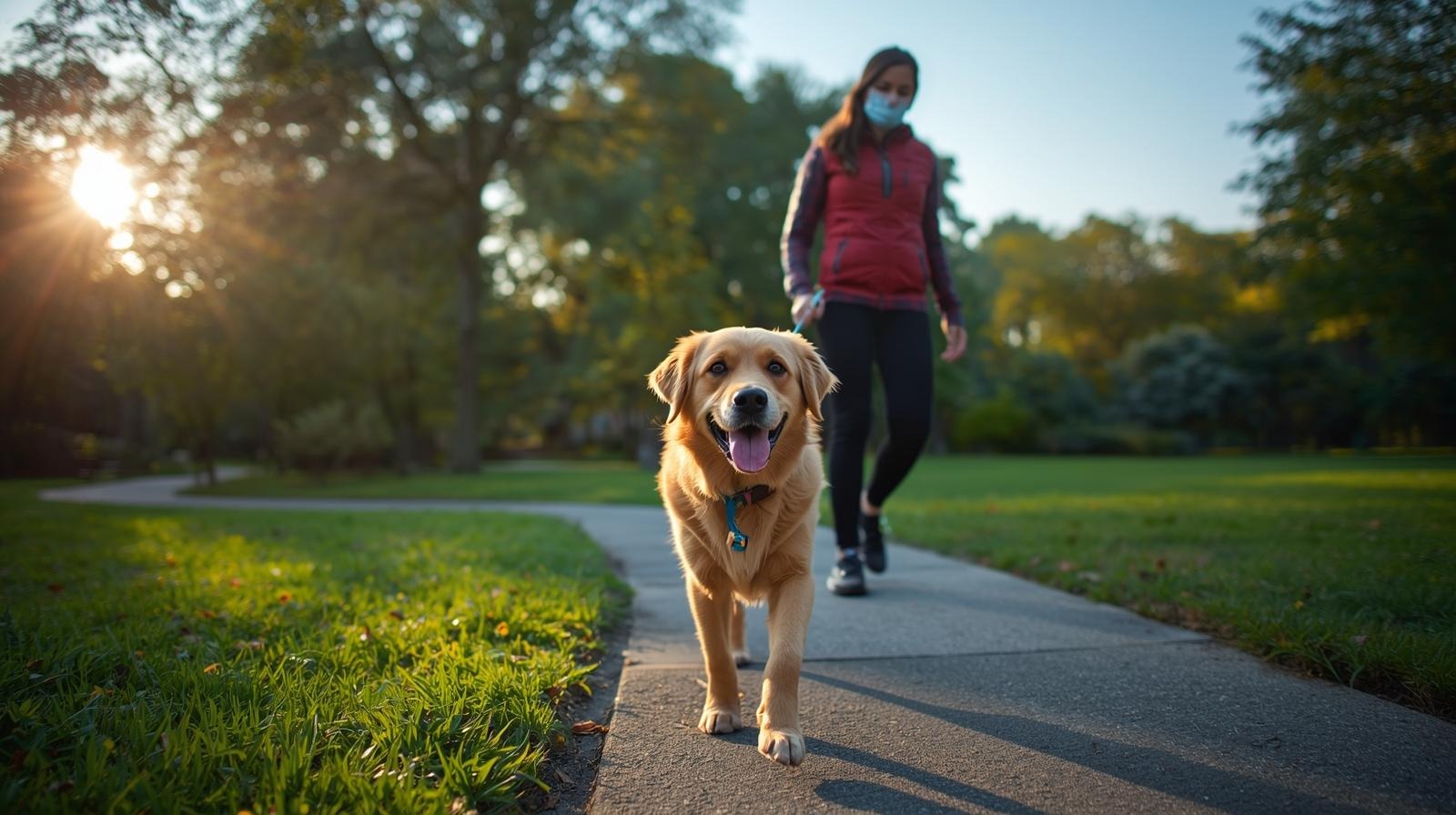
Breed-Wise Daily Walking Guide for Indian Dogs
Note: These are general guidelines. Health conditions, age, and fitness levels may require adjustments.
🐕 Small Breeds (Shih Tzu, Pug, Pomeranian, Lhasa Apso)
- Daily Walk Time: 20–30 minutes
- Frequency: 1–2 short walks
- Key Focus: Mental stimulation over distance
Flat-faced (brachycephalic) breeds like Pugs and Shih Tzus should never be forced into long walks. Breathing stress is a real risk.
🐕 Medium Breeds (Indie, Beagle, Cocker Spaniel)
- Daily Walk Time: 40–60 minutes
- Frequency: 2 walks
- Key Focus: Balanced pace + sniffing time
Indian Indies are extremely adaptable but still need consistent walks to avoid behavioural problems.
🐕 Large Breeds (Labrador, Golden Retriever, German Shepherd)
- Daily Walk Time: 60–90 minutes
- Frequency: 2 structured walks
- Key Focus: Joint-safe walking, not overexertion
Many large-breed dogs develop early joint issues due to over-enthusiastic walking during puppyhood.
🐕 Giant Breeds (Saint Bernard, Great Dane, Mastiff)
- Daily Walk Time: 30–45 minutes
- Frequency: 2 gentle walks
- Key Focus: Slow pace, joint protection
Contrary to popular belief, giant breeds need less walking, not more.
How Walking Needs Change with Age
🐾 Puppies (Up to 12 Months)
- Short, frequent walks
- Avoid stairs and long distances
- Focus on exploration, not exercise
🐾 Adult Dogs (1–7 Years)
- Structured walks
- Balanced pace
- Training + walking combination
🐾 Senior Dogs (7+ Years)
- Shorter, slower walks
- Warm-up before stepping out
- Watch for stiffness or pain
If your senior dog shows discomfort, it’s best to consult a vet. Book an online vet consultation on MyFurries for personalised guidance.
Indian Home & Weather Factors That Affect Dog Walking
- Cold tiled floors worsen joint pain
- Winter mornings increase stiffness
- Pollution affects breathing
- Stray dog encounters increase stress
Best walking times in January:
- Morning: 8–10 AM
- Evening: 4–7 PM
Should Walking Be Combined with Training?
Absolutely.
Dogs who walk without mental engagement often return home still restless. Adding:
- Loose-leash training
- Sniff breaks
- Basic commands during walks
can dramatically improve behaviour.
Book an online dog training consultation here
When Walking Is NOT Enough
If your dog still shows:
- Anxiety
- Sudden aggression
- Limping
- Extreme lethargy
there may be an underlying health or behavioural issue.
Do not increase walk duration blindly. Talk to a vet on MyFurries to identify the real cause.
Key Takeaways for Indian Dog Parents
- More walking is not always better
- Breed and age matter more than distance
- Observe your dog, not social media trends
- Consistency beats intensity
The right walk can transform your dog’s health — the wrong one can slowly harm it.