

Published: February 2026 | Occasion: World Spay Day – February 24 | Written By: Dr. Vinay Chhabra
As we approach World Spay Day on February 24, 2026 , I find myself reflecting on how dramatically our understanding of veterinary medicine has evolved.
A decade ago, if you had asked me when to spay or neuter your dog, I would have confidently answered: six months. It was the gold standard—simple, universal, unquestioned.
Today, in the light of large-scale longitudinal research, that answer has become far more nuanced—and far more personal.
We are no longer talking only about population control. We are talking about longevity, orthopedic health, immune development, and cancer risk.
Most importantly, we are learning that the hormones we once rushed to remove are not incidental. They are architects of a dog’s skeletal and immune systems.
This is a deep dive into what longevity research truly tells us—and why “timing” may be the most important word in your pet’s medical record in 2026.
1. Moving Beyond the “Six-Month Standard”
For decades, veterinary guidance followed a “one size fits all” model. A five-pound Chihuahua and a 120-pound Great Dane received the same advice.
That approach began to fracture with data emerging from institutions such as the UC Davis School of Veterinary Medicine, where breed-specific health outcomes were studied across thousands of dogs.
The core insight was simple but profound:
Sex hormones are not just reproductive hormones.
Estrogen and testosterone act as biological messengers that signal long bones when to stop growing. Remove them too early, and that signal never fully arrives.
The Science of Growth Plates
Growth plates (physes) are areas of cartilage at the ends of long bones. They remain open during growth and close once skeletal maturity is reached.
When gonadectomy occurs before closure:
- Long bones grow longer than genetically intended
- Joint angles subtly change
- Ligaments experience abnormal mechanical stress
In large breeds especially, I’ve seen dogs that are slightly taller, narrower-chested, and biomechanically misaligned—conditions that often surface later as joint disease.
Breed-Specific Guidance (What the Data Now Supports)
- Small Breeds (<45 lbs): Growth plates close earlier. The traditional six-month guideline generally remains appropriate.
- Large & Giant Breeds (>45 lbs): Evidence strongly supports delayed neutering—typically between 9 and 24 months, depending on breed.
This distinction is no longer theoretical. It is evidence-based medicine.
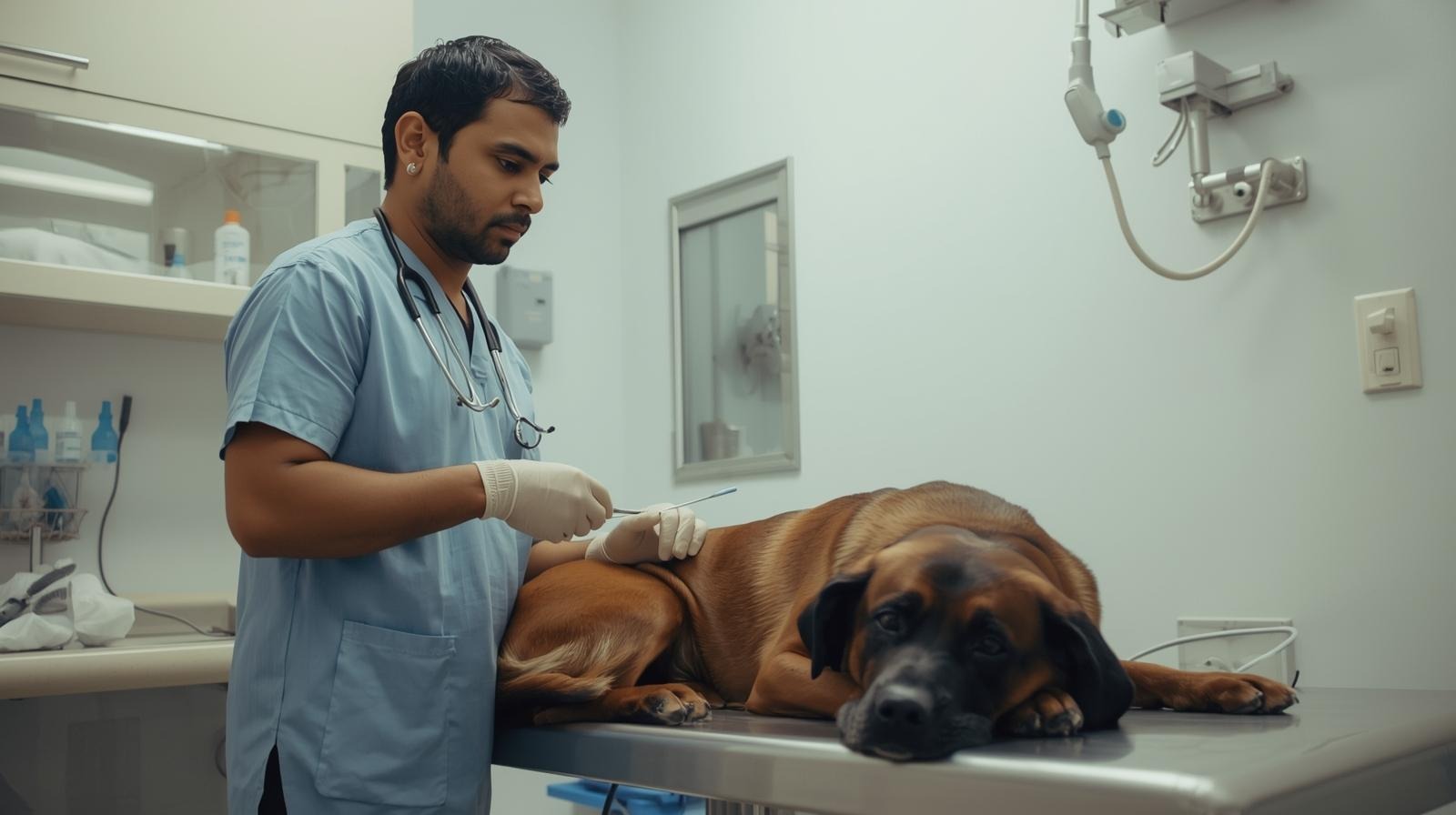
2. Why Waiting Improves Long-Term Health in Large Dogs
For large-breed pet parents, delaying neutering can feel counterintuitive—or even irresponsible—especially under social pressure.
But the research tells a clear story.
Orthopedic Risk: CCL Tears & Hip Dysplasia
Early neutering alters the relative growth of the tibia and femur, increasing strain on the cranial cruciate ligament (CCL).
Large dogs neutered before six months show:
- Significantly higher rates of CCL rupture
- Earlier onset of osteoarthritis
- Increased likelihood of lifelong mobility issues
Hip dysplasia risk also increases when pelvic development is altered before maturity.
The Cancer Paradox
This is where the conversation becomes complex—and breed-specific.
Mammary Tumors
Early spaying dramatically reduces mammary cancer risk. This benefit is well-documented and real.
But…
Other cancers appear more frequently with early gonadectomy in certain breeds:
- Osteosarcoma: Increased incidence in Rottweilers neutered early
- Hemangiosarcoma: Markedly higher risk in female Golden Retrievers spayed before one year
Longevity research forces us to ask not “Which risk is eliminated?” but “Which risk is more lethal for this specific breed?”

3. Why Cats Follow a Different Rule: “Fix by Five”
While dogs are moving toward delayed procedures, cats remain an exception—and for good reason.
Cats are biologically optimized for rapid reproduction. A female cat can enter her first heat as early as four months.
Unlike dogs, there is no convincing evidence that delayed spaying improves feline skeletal health.
The Behavioral Reality
Once hormone-driven spraying begins in male cats, reversal is difficult—even after neutering.
Early spaying/neutering prevents:
- Territorial urine spraying
- Unwanted litters
- Stress-related aggression
Critical Health Benefits
- Pyometra: A life-threatening uterine infection
- Mammary Cancer: Reduced by over 90% when spayed before first heat
For cats, earlier truly is safer.
4. Managing the “Intact” Months Responsibly
Delaying neutering does not mean ignoring responsibility.
For Female Dogs
- Use high-quality, washable dog diapers during heat
- Never leave unattended outdoors
- Avoid boarding facilities during estrus
For Male Dogs
- Leash walks only in public spaces
- No dog parks during adolescence
- Structured training to manage hormone-driven behavior
An intact adolescent dog requires management—but not fear.