
Approved by Senior Vet- Dr. Vinay Chhabra
Worm infections are one of the most common health issues seen in cats and kittens around the world.
Many cats carry intestinal parasites without obvious symptoms in the early stages. Unfortunately, untreated worm infections can lead to digestive problems, weight loss, poor immunity, and long-term health complications.
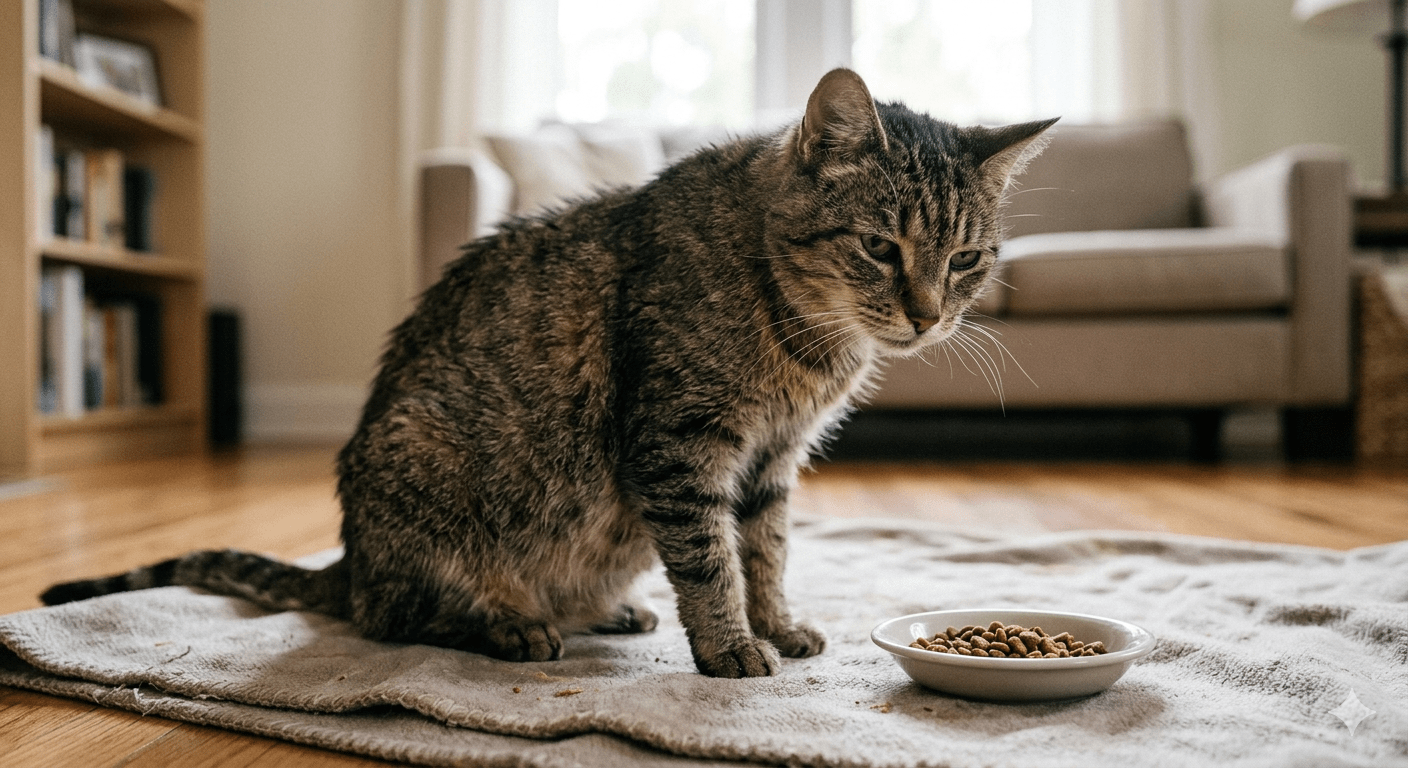
This complete veterinary guide explains how to tell if your cat has worms, the common types of worms in cats, warning signs every pet parent should know, and when to consult a veterinarian.
If you suspect your cat may have worms, you can consult a veterinarian online through MyFurries for professional guidance and treatment advice.
Why Worm Infections Are Common in Cats

Cats are natural hunters and explorers. Their curiosity often exposes them to parasites found in the environment.
Common sources of worm infections include:
- Hunting rodents or birds
- Contact with infected feces
- Flea infestations
- Contaminated soil or litter
- Mother-to-kitten transmission
Kittens are especially vulnerable because their immune systems are still developing.
7 Warning Signs Your Cat May Have Worms
1. Visible Worms in Stool or Around the Tail
One of the most obvious signs of worms in cats is the presence of small white worms or rice-like segments around the anus or in the litter box.
These are often tapeworm segments.
2. Increased Vomiting
Cats occasionally vomit hairballs, but frequent vomiting may indicate intestinal parasites.
In some cases, long spaghetti-like worms may be visible in vomit.
3. Sudden Weight Loss
Worms absorb nutrients from the food your cat eats.
This can cause gradual weight loss even when your cat appears to be eating normally.
4. Pot-Bellied Appearance in Kittens
Kittens with roundworm infections often develop a swollen or bloated belly.
This classic sign is commonly seen in stray or recently adopted kittens.
5. Diarrhea or Soft Stool
Parasites irritate the intestinal lining and disrupt digestion.
This may cause diarrhea, mucus in stool, or foul-smelling feces.
6. Dull Coat and Poor Fur Quality
A healthy cat has smooth and shiny fur.
Chronic worm infections can lead to nutritional deficiencies that cause a rough, dull coat.
7. Lethargy and Low Energy
If worms cause anemia or nutrient deficiency, your cat may appear weak or tired.
Any persistent lethargy should be evaluated by a veterinarian.
Common Types of Worms in Cats
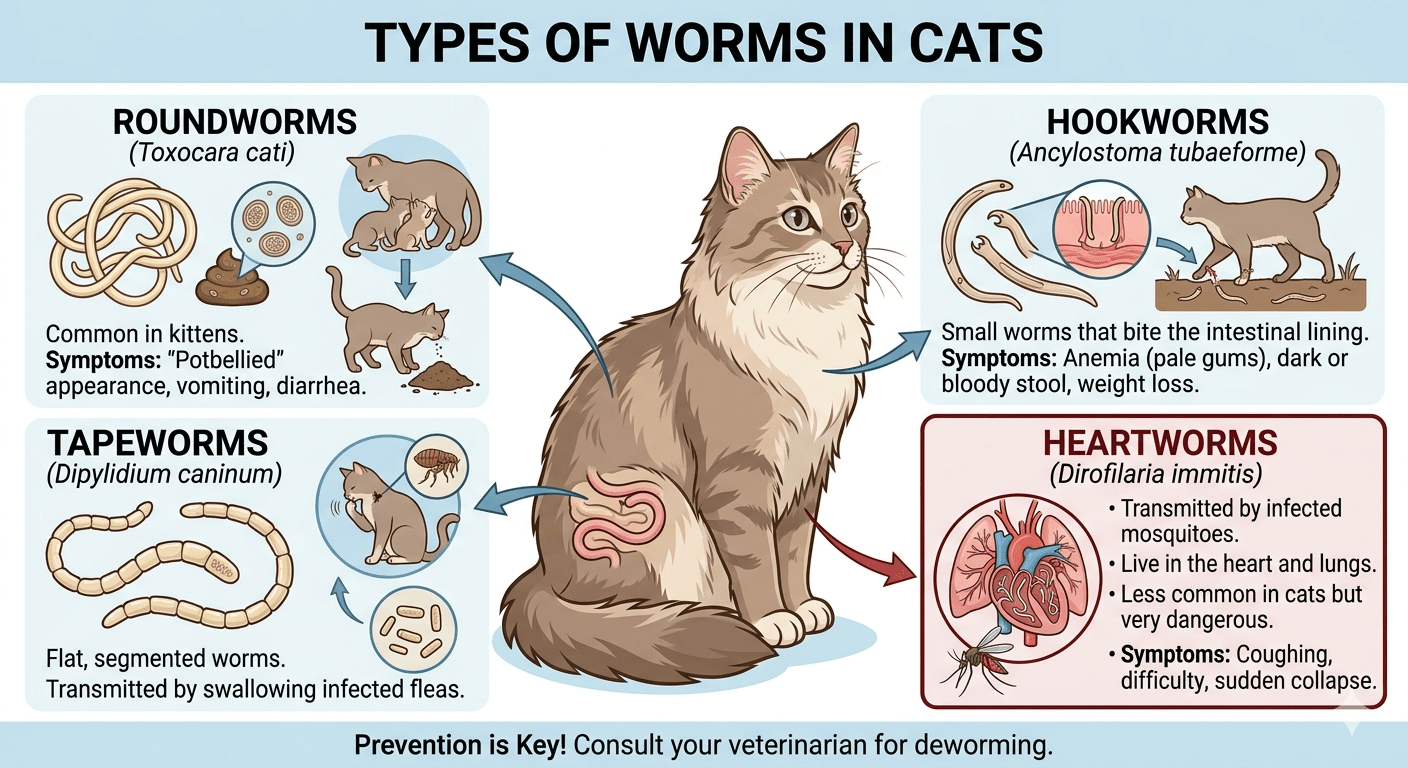
Roundworms
Roundworms are the most common intestinal parasite found in cats and kittens.
They resemble spaghetti and live in the intestines.
Tapeworms
Tapeworms are transmitted when cats ingest infected fleas while grooming themselves.
Segments resembling rice grains may be seen near the tail.
Hookworms
Hookworms attach to the intestinal wall and feed on blood.
Severe infections can lead to anemia and weakness.
Heartworms
Heartworms are transmitted by mosquito bites.
While less common in cats than dogs, they can cause serious respiratory and cardiac problems.
How Veterinarians Diagnose Worm Infections
Veterinarians diagnose worm infections using laboratory tests.
The most common diagnostic methods include:
- Microscopic fecal examination
- Parasite egg identification
- Blood testing for heartworm disease
If your cat shows symptoms, you can book an online vet consultation with MyFurries to discuss testing and treatment options.
Treatment Options for Worms in Cats

Fortunately, most worm infections can be treated effectively with veterinary medications.
Common treatments include:
- Deworming tablets
- Liquid antiparasitic medications
- Topical parasite control products
- Combination parasite prevention treatments
Always follow veterinary instructions carefully and complete the full treatment course.
How Often Should Cats Be Dewormed?
Regular parasite control is essential for feline health.
Typical deworming schedules include:
- Kittens: every 2–3 weeks until 12 weeks of age
- Young cats: monthly preventive treatments
- Adult cats: every 3–6 months depending on lifestyle
Indoor cats may still require parasite prevention because fleas and insects can enter homes.
Preventing Worm Infections in Cats
Prevention is easier and safer than treating advanced infections.
- Maintain regular flea control
- Clean litter boxes daily
- Avoid feeding raw or infected prey
- Schedule regular vet checkups
- Follow recommended deworming schedules
If you are unsure about the right parasite prevention plan for your cat, you can consult a veterinarian on MyFurries for personalized advice.
When to Seek Veterinary Help Immediately
You should contact a veterinarian urgently if your cat shows:
- Persistent vomiting
- Bloated abdomen
- Severe diarrhea
- Blood in stool
- Extreme lethargy
Early treatment prevents complications and helps your cat recover quickly.
Final Thoughts
Worm infections are extremely common in cats and kittens, but they are also highly treatable when detected early.
Understanding the warning signs, maintaining proper hygiene, and following a regular deworming schedule can keep your cat healthy and comfortable.
If you suspect your cat may have worms, do not delay treatment. Early veterinary advice can prevent serious health complications.
You can book an online consultation with a MyFurries veterinarian to get expert guidance on diagnosis, treatment, and prevention.