Autumn to Winter: Helping Your Pets Transition Smoothly Through Seasonal Allergies and Flu’s
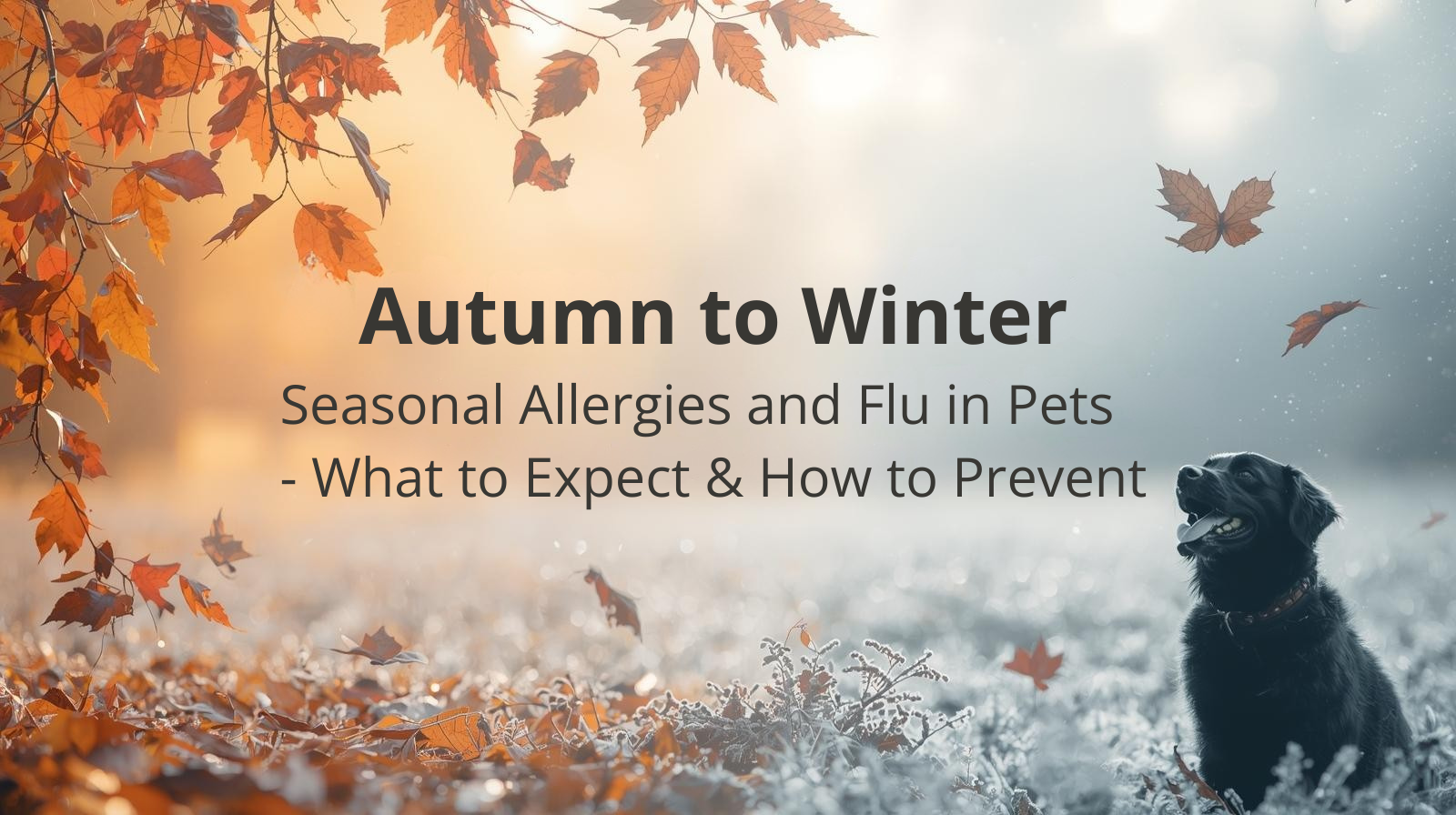
Autumn is here — that magical time when the air turns crisp, leaves turn golden, and pets begin adjusting to cooler days. But while it’s a cozy season for us, dogs and cats often face a different reality. The change from autumn to winter brings skin allergies, dry coats, and seasonal colds that can make pets uncomfortable if we aren’t proactive.
Here’s what to expect, what to watch for, and how to keep your furry friends healthy through the transition — with natural care, preventive tips, and a vet’s insight.
Why Autumn Can Be Challenging for Pets
Autumn’s drop in temperature and humidity causes environmental shifts that directly affect your pet’s skin, coat, and immune system.
- Leaf mold and pollen: Fallen leaves trap moisture, growing mold that triggers allergies in sensitive pets.
- Temperature fluctuations: Warm afternoons and cold mornings can cause mild respiratory stress.
- Flea and tick flare-ups: Mild, damp conditions help parasites thrive longer indoors.
- Dry indoor air: Heaters and low humidity cause flaky skin and dull coats.
- Shedding season: Autumn shedding helps pets develop winter coats but can worsen itchiness if not managed.
Common Autumn Health Issues in Dogs and Cats
Mold and Leaf Allergies
Decomposing leaves harbor mold spores that irritate your pet’s respiratory and skin systems.
- Sneezing or nasal discharge
- Watery, red eyes
- Itchy skin or paw licking
- Ear infections (common in floppy-eared breeds)
Prevention Tip: Rake leaves often and wipe your pet’s paws after every walk.
Fleas and Ticks
Don’t let cooler weather fool you — fleas remain active indoors, hiding in carpets and bedding.
- Frequent scratching or biting
- Tiny black flea dirt on fur
- Red, bumpy skin patches
Prevention Tip: Continue vet-approved flea and tick prevention all year round.
Dry Skin and Dull Coat
The mix of cold outdoor air and heated homes can dehydrate your pet’s skin and coat.
- Flaky skin or dandruff
- Rough, brittle fur
- Persistent scratching or licking
Prevention Tip: Add Omega-3 fatty acids (fish or flaxseed oil) to meals, ensure hydration, and brush daily to distribute natural oils.
Kennel Cough and Respiratory Issues
Cooler, drier air can irritate the respiratory system. Dogs that visit parks or boarding centers are at higher risk of kennel cough.
Symptoms: Dry cough, nasal discharge, fatigue, or loss of appetite.
Prevention Tip: Get your pet’s Bordetella vaccination updated and avoid contact with coughing animals.
Joint and Muscle Stiffness
Cold weather can worsen arthritis or joint stiffness, especially in senior pets and large breeds.
Prevention Tip: Keep pets warm, maintain gentle exercise, and use vet-approved supplements like glucosamine.
Holistic Remedies and Natural Care
For Skin Allergies
- Oatmeal baths: Calm itchy, inflamed skin.
- Coconut oil: Massage weekly to moisturize and reduce dandruff.
- Diluted apple cider vinegar: Acts as a natural antifungal rinse (avoid open wounds).
For Respiratory Comfort
- Steam therapy: Sit your pet near a humidifier or warm shower steam to ease congestion.
- Humidifiers: Maintain indoor air moisture to prevent dryness.
- Herbal teas: Cooled chamomile or licorice root tea (vet-approved) can soothe mild throat irritation.
For Joint Health
- Use warm compresses on sore joints.
- Encourage short, gentle walks for flexibility.
- Add a pinch of turmeric with coconut oil (vet-approved) for natural anti-inflammatory benefits.
Boost Immunity Before Winter
Autumn is the perfect time to prepare your pet’s immune system for the cold months ahead.
- Feed antioxidant-rich foods like pumpkin, carrots, and spinach.
- Add probiotics to improve gut health and immunity.
- Offer warm broths to encourage hydration.
- Ensure morning sunlight and daily playtime.
Vet’s Note: 5 Quick Tips to Protect Pets This Autumn
- Rinse paws after walks: Removes mold spores and pollen.
- Continue flea protection: Autumn humidity extends flea life cycles.
- Brush daily: Controls shedding and promotes a healthy coat.
- Watch for breathing changes: Mild coughs can turn serious quickly.
- Schedule an autumn check-up: Review vaccines, skin condition, and weight before winter.
Final Thought
Autumn’s golden glow can hide seasonal health challenges for pets. But with a mix of awareness, preventive care, and timely vet advice, you can help your furry family members enjoy the season in comfort and good health.
Need expert advice? Book an online vet consultation at MyFurries and get personalized guidance for your pet’s seasonal care.