
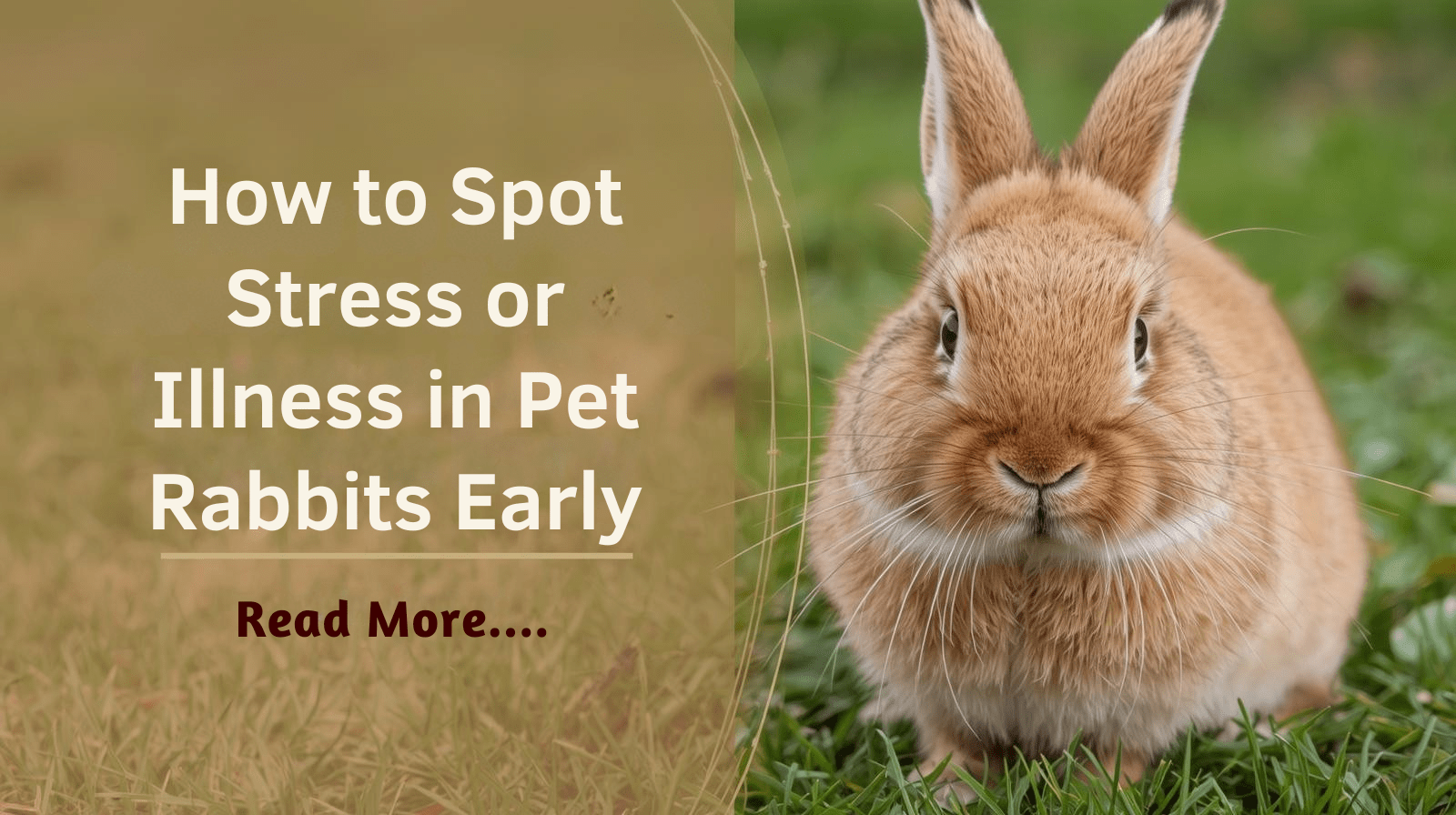
Reading the Subtle Language of a Prey Animal
In the wild, a rabbit that looks sick is a rabbit that gets eaten. This evolutionary drive to hide weakness has followed our domestic companions into our living rooms. To the untrained eye, a rabbit might appear perfectly fine until they are at death’s door.
As a responsible owner, you must become a “bunny detective.” Spotting the difference between a sleepy rabbit and a lethargic rabbit can be the difference between a quick vet visit and a tragedy. This guide breaks down the clinical and behavioral signs of stress and illness that every owner must know.
1. The “Golden Rule” of Rabbit Health: Appetite
A healthy rabbit is a bottomless pit for hay and greens. If your rabbit refuses their favorite treat—be it a piece of banana or a sprig of cilantro—this is an immediate red flag.
Anorexia in rabbits is usually a symptom of GI Stasis (Gastrointestinal Stasis), where the digestive tract slows down or stops. Unlike humans, who can skip a meal when they have a cold, a rabbit’s gut must move constantly to prevent the buildup of deadly gas and toxins.
2. Decoding the Poop: Size, Shape, and Frequency
The litter box is the window to your rabbit’s soul. You should be checking it daily. Here is what to look for:
- Small, hard, or misshapen droppings: Indicates dehydration or the beginning of a slow gut.
- String-of-pearls (Poop connected by fur): Common during shedding seasons. It means your rabbit is ingesting too much fur. Increase hay and brushing immediately.
- Mucus in stool: A sign of serious inflammation or parasites.
- Cecotropes left behind: These are the soft, grape-like clusters rabbits usually eat. If you find many of these in the cage, your rabbit may be on a diet that is too rich, or they may be too obese/arthritic to reach them.
3. The Rabbit Grimace Scale (RGS)
Scientific research has developed a way to “read” a rabbit’s face for pain. If you notice these three facial shifts, your rabbit is likely in distress:
| Feature | Healthy/Relaxed | Stressed/In Pain |
|---|---|---|
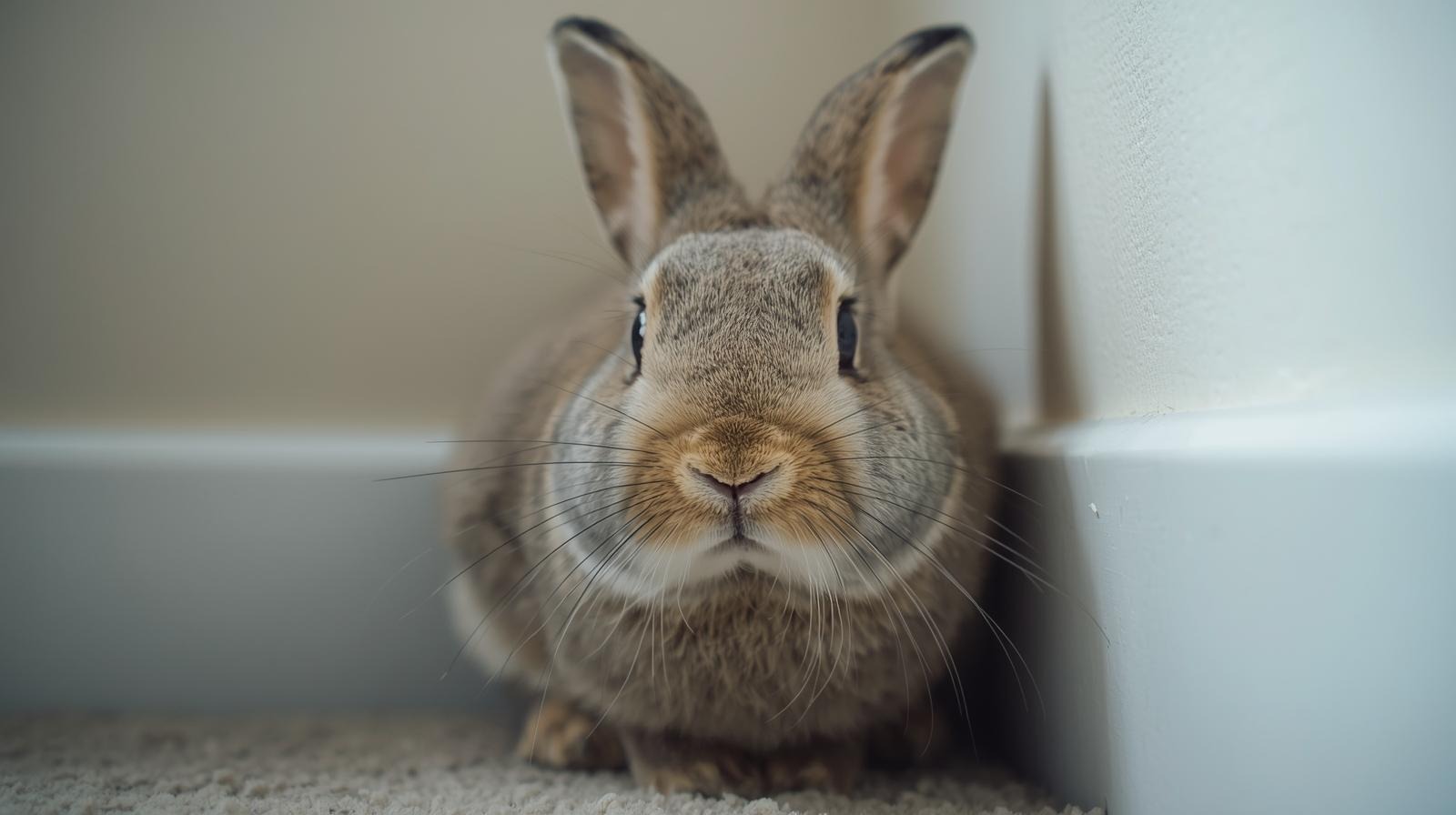
| Eyes | Round and bright | “Orbital tightening” (squinting or half-closed) |
| Nose/Cheeks | U-shaped nose, relaxed cheeks | V-shaped nose, tense/bulging cheeks |
| Whiskers | Loose, fanned out to the sides | Stiff, bunched together, or pointing downward |
4. Posture and Body Language
Rabbits communicate primarily through movement. A happy rabbit “flops” on its side or “binkies.” A sick or stressed rabbit adopts very different postures:
The “Hunched” Position
If a rabbit is sitting tucked up into a tight ball, with their weight forward on their paws rather than their haunches, and their eyes are dull, they are likely experiencing abdominal pain.
The Pressing Behavior
Sometimes, a rabbit with gas will repeatedly press their belly flat against the floor, then get up and move, then press again. They are trying to find a position that relieves the pressure in their gut.
5. Changes in Sound: Grinding vs. Purring
Rabbits are mostly silent, but they do make noise with their teeth. It is vital to know the difference:
- Tooth Purring: A light, rhythmic vibration when you pet them. This is a sign of contentment.
- Tooth Grinding: A loud, crunching sound that sounds like two rocks being rubbed together. This is a clear sign of severe pain or dental disease.
6. Psychological Stress: Behavioral Shifts
Stress isn’t always physical; it can be environmental. Rabbits are sensitive to loud noises, new pets, or lack of stimulation. Signs of psychological stress include:
- Excessive Grooming: Licking themselves until they have bald spots (often on the forelegs).
- Bar Biting: If kept in a cage, biting the metal bars is a sign of extreme frustration and boredom.
- Hyper-Vigilance: A rabbit that constantly hides and refuses to come out even for food is likely terrified of something in its environment.
- Thumping: While a single “thump” might be a warning, repeated thumping when no danger is present indicates a high-stress state.
7. Respiratory Distress
Rabbits are obligate nasal breathers. If you see your rabbit breathing through its mouth or tilting its head back to “gasped” for air, this is a top-tier medical emergency. Other signs include “snuffles” (white discharge from the nose) or frequent sneezing, which could indicate a Pasteurella infection.
8. Lethargy vs. Relaxation
Rabbits are crepuscular, meaning they are most active at dawn and dusk. It is normal for them to nap during the day. However, “lethargy” is different. A lethargic rabbit will not react to their environment, will not move when nudged, and feels “floppy” or limp when picked up.
Summary Checklist: Is it Time for the Vet?
If you check more than two boxes below, contact an exotics veterinarian immediately:
- Refusal to eat hay or pellets for >6 hours.
- No poop in the litter box for >8 hours.
- Loud, audible tooth grinding.
- Cold ears (a sign of circulatory collapse/shock).
- Head tilt (the rabbit’s head is permanently turned to one side).
- Visible third eyelid or discharge from eyes/nose.
Closing Thoughts
Your rabbit depends on you to be their voice. Because they cannot cry out in pain, your observation skills are their only defense. By spending time on the floor with your rabbit every day, you will learn their “baseline”—making it much easier to spot when something is slightly off.
Trust your gut. Owners often say, “They just didn’t seem like themselves.” In the world of rabbits, that intuition is often the first step to saving a life.
Not sure if your rabbit’s behavior is normal?
Talk to a verified vet or behaviorist through MyFurries and get peace of mind.
Get an Expert Opinion