
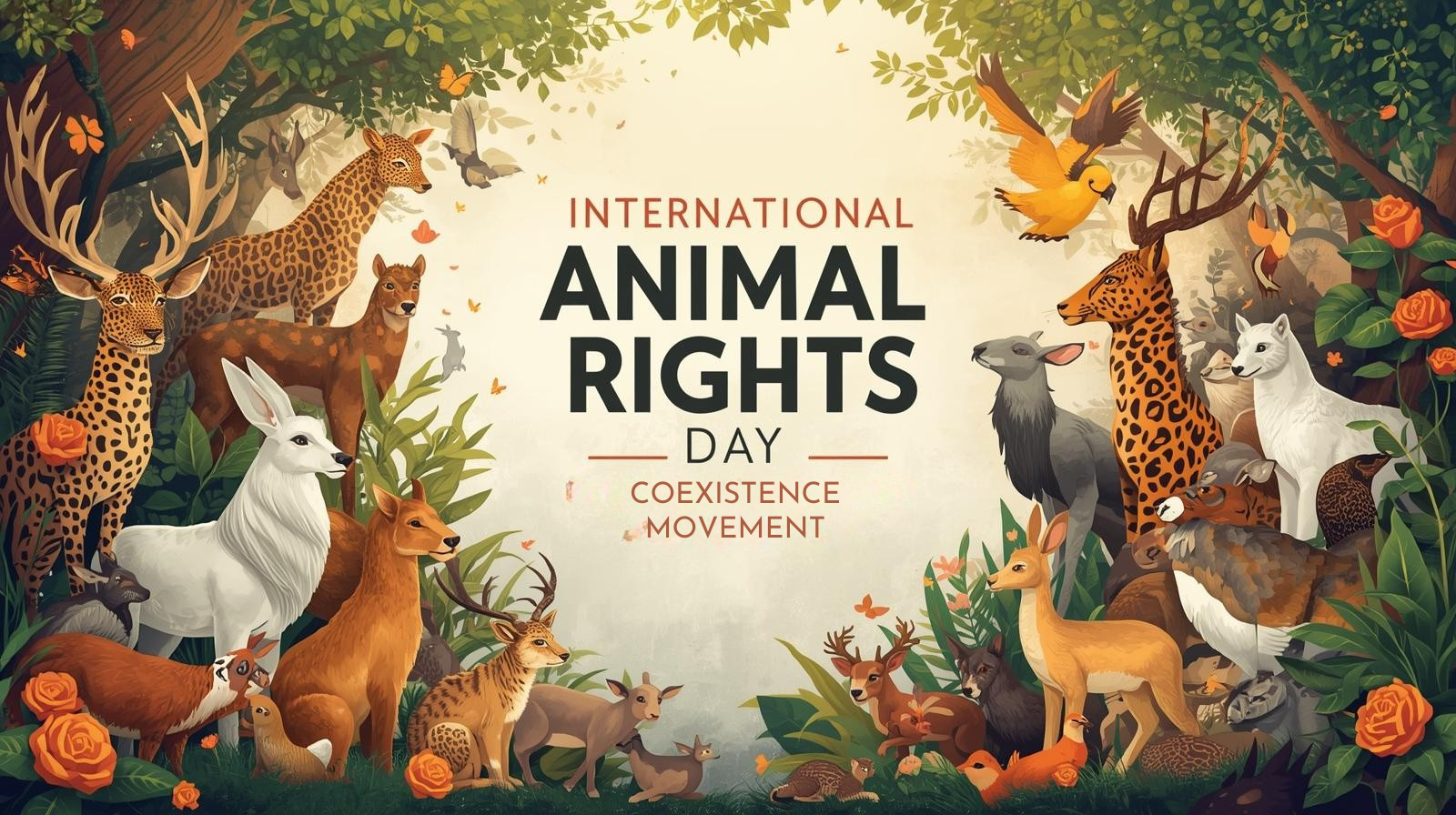
Did you know that India is the oldest civilization in the world to formally protect animals—spiritually, legally, and medically?
On International Animal Rights Day (Dec 10), countries talk about compassion. But India doesn’t just talk about it — we have lived it for thousands of years.
From the Vedas and Ahimsa, to Ashoka’s animal welfare laws, to the world’s first veterinary hospitals, India has always led the way.
Today, our modern challenge is not whether we care about animals — but whether we will uphold the legacy we inherited.
🕉️ Vedic India: The World’s First Framework of Animal Rights
Why were animals so deeply protected in ancient India?
Because the Vedas introduced Ahimsa, recognizing that every living being has the right to exist without harm. This established the earliest ethical foundation for animal rights.
Key Vedic Principles Still Relevant Today
- Ahimsa (Non-violence) as a universal moral duty
- Animals as sentient beings — capable of suffering
- The cow declared Aghnya (“not to be killed”)
- Emphasis on coexistence with nature and all creatures
India wasn’t merely kind to animals — it built an entire ethical system around protecting them.
👑 Ashoka the Great: The World’s First Animal Welfare Legislator
Q: Who created the first animal welfare laws in the world?
A: Emperor Ashoka — almost 2,300 years before modern lawmaking.
What Ashoka Did (Unmatched Even Today):
- 🏥 Built the first veterinary hospitals
- 🌿 Planted herbs specifically for animal treatment
- 📜 Restricted killing and cruel practices (Rock Edict I)
- 🌳 Implemented wildlife protections and habitat preservation
- 🕊️ Promoted compassion as state policy
Ashoka transformed compassion into governance long before animal rights became a global conversation.
📚 India: The Birthplace of Veterinary Science
Q: Who is the father of veterinary medicine?
A: Shalihotra of ancient India.
📘 The Shalihotra Samhita (3rd Century BCE)
- 12,000+ verses
- Detailed anatomy, pathology, surgery
- Focused on horses (hippiatrics)
- First organized veterinary medical text in the world
India also produced:
- Hasti Ayurveda (Elephant medicine) by Sage Palakapya
- Expertise immortalized through Nakula & Sahadeva in the Mahabharata
India didn’t just protect animals — it studied them, healed them, and respected them.
🚨 The Modern Crisis: Will India Uphold Its Heritage or Abandon It?
Today, we face a challenge that strikes at the heart of our legacy:
Should healthy, sterilized community dogs be permanently removed and caged in shelters?
⚠️ Why Permanent Sheltering Is Dangerous & Unethical
1️⃣ The Vacuum Effect (Scientifically Proven Worldwide)
When sterilized dogs are removed:
- New, unsterilized dogs migrate in
- They breed rapidly
- Rabies risk grows
- Conflicts increase
India ends up worse off.
2️⃣ Shelters Become Disease Hotspots
Shelters — even the best ones — cannot safely contain free-living dogs.
Inside shelters, dogs face:
- Chronic stress
- Immune suppression
- Parvo, Distemper outbreaks
- Territorial fights
- Shortened lifespans
Sheltering healthy dogs is not rescue — it is cruel confinement.
Shelters should be for the injured, sick, disabled, or abused — NOT for healthy, free-roaming dogs.
Way Forward: India Must Lead the Global Coexistence Movement
On International Animal Rights Day, India must recommit to:
✓Humane, science-backed CNVR
✓ Community education & awareness
✓ Strengthening veterinary infrastructure
✓ Rejecting fear-driven, draconian sheltering
✓ Protecting animals as part of our cultural identity
India has the history, the science, and the moral authority to lead the world in animal rights.
We must not abandon the legacy built over 5,000 years.
❓FAQ
Q1: Why is International Animal Rights Day important in India?
Because India has the world’s oldest ethical and scientific framework for animal rights — from the Vedas to Ashoka and the ABC Rules today.
Q2: Why shouldn’t community dogs be permanently sheltered?
Sheltering causes stress, disease outbreaks, and population rebounds due to the vacuum effect.
Q3: What is the legal method for managing street dogs in India?
The ABC (Animal Birth Control) Rules, 2023 mandate CNVR: Catch, Neuter, Vaccinate, Release.
Q4: Does India have the world’s first veterinary science?
Yes. The Shalihotra Samhita is the earliest known comprehensive veterinary text.
Q5: What is India’s role in global animal rights today?
India can lead the world by combining ancient ethics with modern, science-backed policy.