Cat vomiting is one of the most common health concerns that pet parents experience.
While occasional vomiting may not always indicate a serious problem, frequent or persistent vomiting can signal digestive issues, infections or underlying illness.
Cats may vomit due to hairballs, dietary problems, parasites or even stress.
Understanding the causes and knowing when to seek veterinary advice is important for protecting your cat’s health.
If your cat is vomiting repeatedly or seems unwell, you can quickly connect with a veterinarian.
👉 Book an Online Vet Consultation
Is Vomiting Normal in Cats?
Occasional vomiting can occur in healthy cats, especially when they regurgitate hairballs.
However, vomiting that happens frequently or is accompanied by other symptoms should be evaluated by a veterinarian.
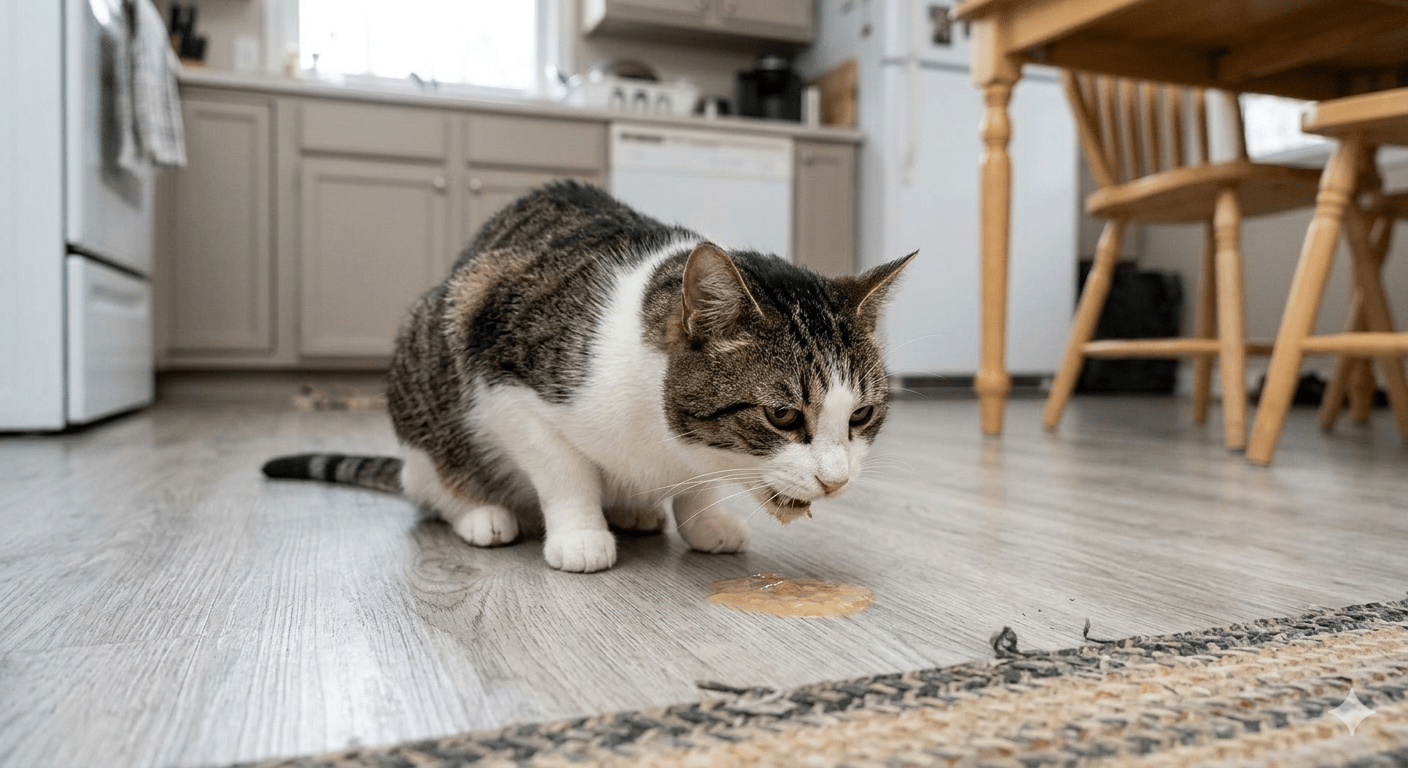
Cats may vomit food, foam, bile or hairballs depending on the underlying cause.
Common Causes of Cat Vomiting
1. Hairballs
Cats groom themselves frequently and swallow loose fur during grooming.
This fur can accumulate in the stomach and form hairballs.
When the hairball becomes too large, the cat may vomit to expel it.
Hairball vomiting is common in long-haired breeds.
2. Eating Too Quickly
Some cats eat their food very fast.
This can cause regurgitation shortly after eating.
Using slow-feed bowls or smaller meal portions may help.
3. Dietary Intolerance
Certain ingredients may upset a cat’s digestive system.
Common triggers include:
- Dairy products
- High-fat foods
- Sudden diet changes
4. Parasites
Intestinal parasites can irritate the digestive tract.
Symptoms may include:
- Vomiting
- Diarrhea
- Weight loss
5. Infections
Viral and bacterial infections can cause vomiting.
These infections may also lead to fever, lethargy and loss of appetite.
6. Eating Something Toxic
Cats may accidentally ingest toxic substances.
Examples include:
- Household plants
- Chemicals
- Human medications
Poison ingestion requires immediate veterinary care.
Types of Cat Vomit and What They Mean
Vomiting Food
Vomiting undigested food often occurs when a cat eats too quickly.
Yellow or Green Vomit
This may contain bile and can occur when the stomach is empty.
Foamy Vomit
White foam may indicate stomach irritation.
Hairball Vomit
Hairballs appear as cylindrical clumps of fur.
Blood in Vomit
This is an emergency and requires immediate veterinary attention.
Emergency Signs Every Cat Owner Should Know
Seek veterinary help immediately if your cat shows:
- Repeated vomiting
- Blood in vomit
- Severe lethargy
- Loss of appetite
- Abdominal pain
- Vomiting with diarrhea
These symptoms may indicate serious illness such as infection or intestinal blockage.
Home Care for Mild Vomiting
If your cat vomits once but otherwise behaves normally, simple home care may help.
Temporary Food Pause
Remove food for a few hours to allow the stomach to settle.
Offer Small Meals
Feed small portions of easily digestible food.
Ensure Hydration
Provide fresh water to prevent dehydration.
Hairball Control
Regular grooming helps reduce hairball formation.
How Veterinarians Diagnose Vomiting
If vomiting persists, veterinarians may perform diagnostic tests.
- Physical examination
- Blood tests
- X-rays
- Ultrasound
- Stool examination
These tests help identify the underlying cause.
Veterinary Treatment for Cat Vomiting
Treatment depends on the cause of vomiting.
Common treatments include:
- Anti-nausea medication
- Fluid therapy
- Dietary changes
- Deworming medication
- Hairball remedies
Preventing Vomiting in Cats
Simple preventive steps can reduce the risk of vomiting.
- Regular grooming to reduce hairballs
- Gradual diet changes
- Safe household environment
- Routine veterinary checkups
- Parasite prevention
When to Contact a Vet
You should seek veterinary advice if:
- Vomiting continues for more than 24 hours
- Your cat refuses food
- Vomiting becomes frequent
- Other symptoms appear
Early veterinary care helps prevent complications and ensures your cat receives proper treatment.