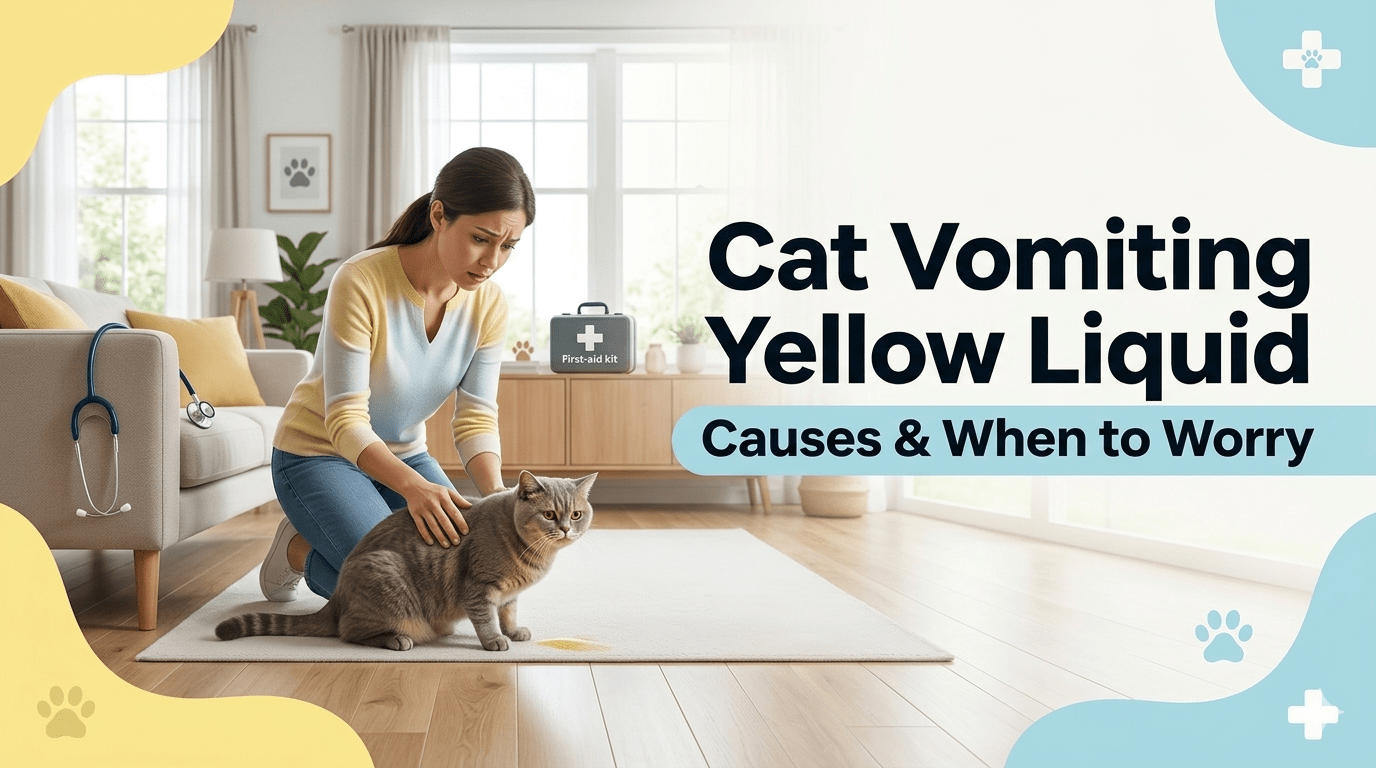
Seeing your cat vomit yellow liquid can be alarming for any pet parent.
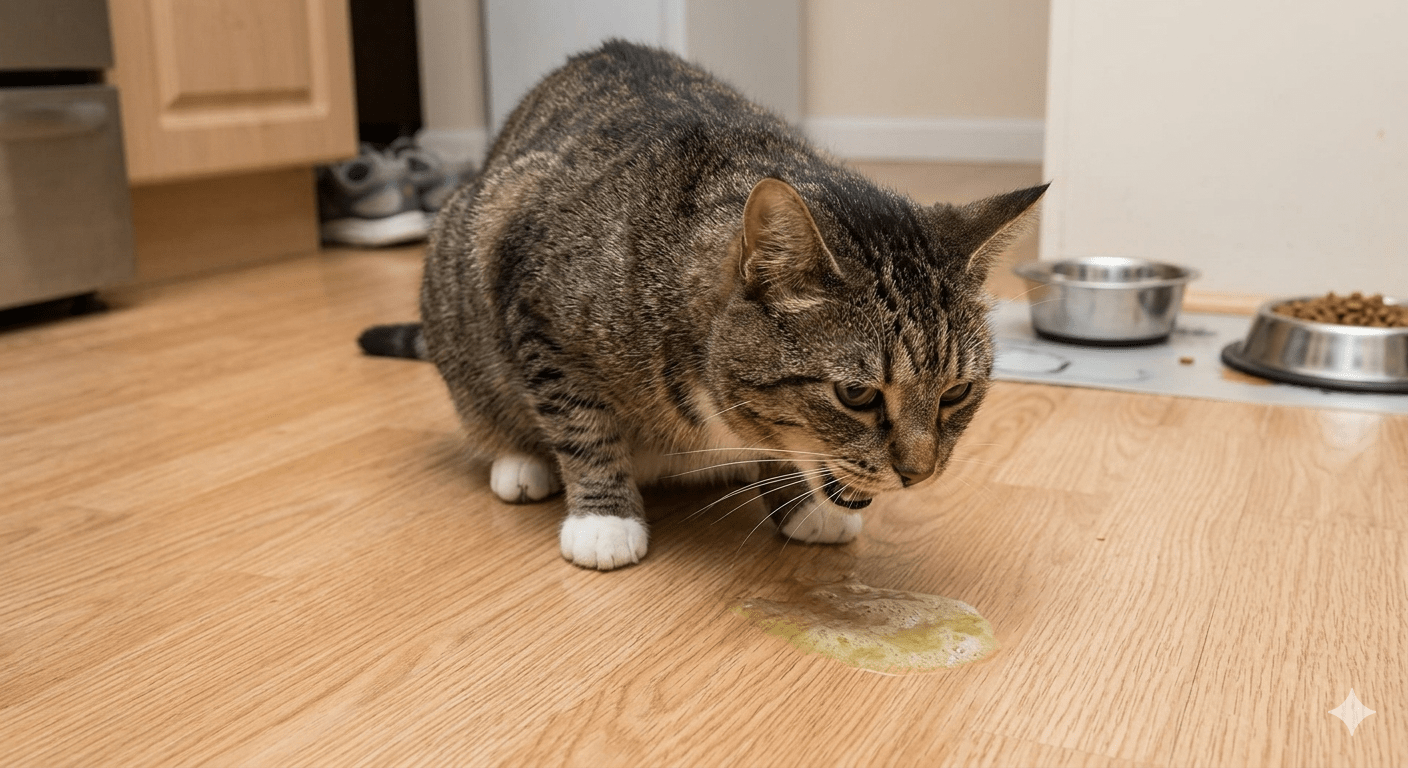
In many cases, this yellow fluid is bile, a digestive substance produced by the liver that helps break down food.
Cats often vomit bile when their stomach is empty for long periods. However, frequent vomiting can sometimes indicate digestive illness, infection or other health issues.
This veterinary guide explains the causes of yellow vomit in cats and when you should contact a veterinarian.
👉 Book an Online Vet Consultation
What Does Yellow Vomit Mean in Cats?
Yellow vomit usually contains bile.
Bile enters the stomach when it remains empty for long periods.
This can cause irritation and trigger vomiting.
This condition is sometimes referred to as bilious vomiting.
Common Causes of Yellow Vomit in Cats
1. Empty Stomach
Cats who go too long without eating may vomit bile.
- Often occurs early morning
- Cat behaves normally afterward
- Usually occasional
2. Hairballs
Hairballs can irritate the stomach and cause vomiting.
Cats swallow fur while grooming which may accumulate in the stomach.
3. Gastritis
Inflammation of the stomach lining can cause nausea and vomiting.
- Loss of appetite
- Repeated vomiting
- Stomach discomfort
4. Dietary Problems
Food intolerance or sudden diet change may upset the stomach.
5. Parasites
Intestinal parasites can cause digestive irritation.
6. Infection or Disease
Some infections or liver diseases may cause bile vomiting.
Emergency Signs
Seek veterinary help immediately if your cat shows:
- Repeated vomiting
- Blood in vomit
- Severe lethargy
- Abdominal pain
- Refusal to eat
Home Care for Mild Vomiting
If your cat vomits once and appears normal afterward, simple care may help.
Small Frequent Meals
Feed smaller portions to prevent the stomach from remaining empty.
Provide Fresh Water
Hydration is essential to prevent dehydration.
Hairball Control
Regular grooming helps reduce swallowed hair.
How Vets Diagnose the Problem
If vomiting persists, your veterinarian may recommend:
- Physical examination
- Blood tests
- X-rays
- Ultrasound
- Stool tests
Treatment Options
Treatment depends on the underlying cause.
- Anti-nausea medication
- Special digestive diets
- Deworming medication
- Fluid therapy
Preventing Vomiting in Cats
- Feed regular meals
- Introduce diet changes gradually
- Brush cats regularly
- Keep toxins out of reach
When to Contact a Vet
Consult a veterinarian if vomiting continues longer than 24 hours or other symptoms appear.