

-Approved by Senior Vet- Dr. Vinay Chhabra
Worm infections are one of the most common health problems seen in dogs worldwide.
Many dogs carry intestinal parasites without showing obvious symptoms at first. Unfortunately, untreated worm infections can lead to serious health problems such as malnutrition, anemia, and digestive disorders.
This comprehensive veterinary guide explains how to recognize dog worms symptoms, the different types of worms that affect dogs, and when you should seek professional veterinary advice.
If you suspect your dog may have worms, you can consult a veterinarian online through MyFurries for quick diagnosis and treatment guidance.
Why Worm Infections Are So Common in Dogs
Dogs are naturally curious animals. They explore the world using their noses and mouths, which exposes them to parasites.
Common sources of worm infections include:
- Contaminated soil
- Flea infestations
- Eating infected animals
- Drinking contaminated water
- Contact with infected feces
Puppies are particularly vulnerable because their immune systems are still developing.
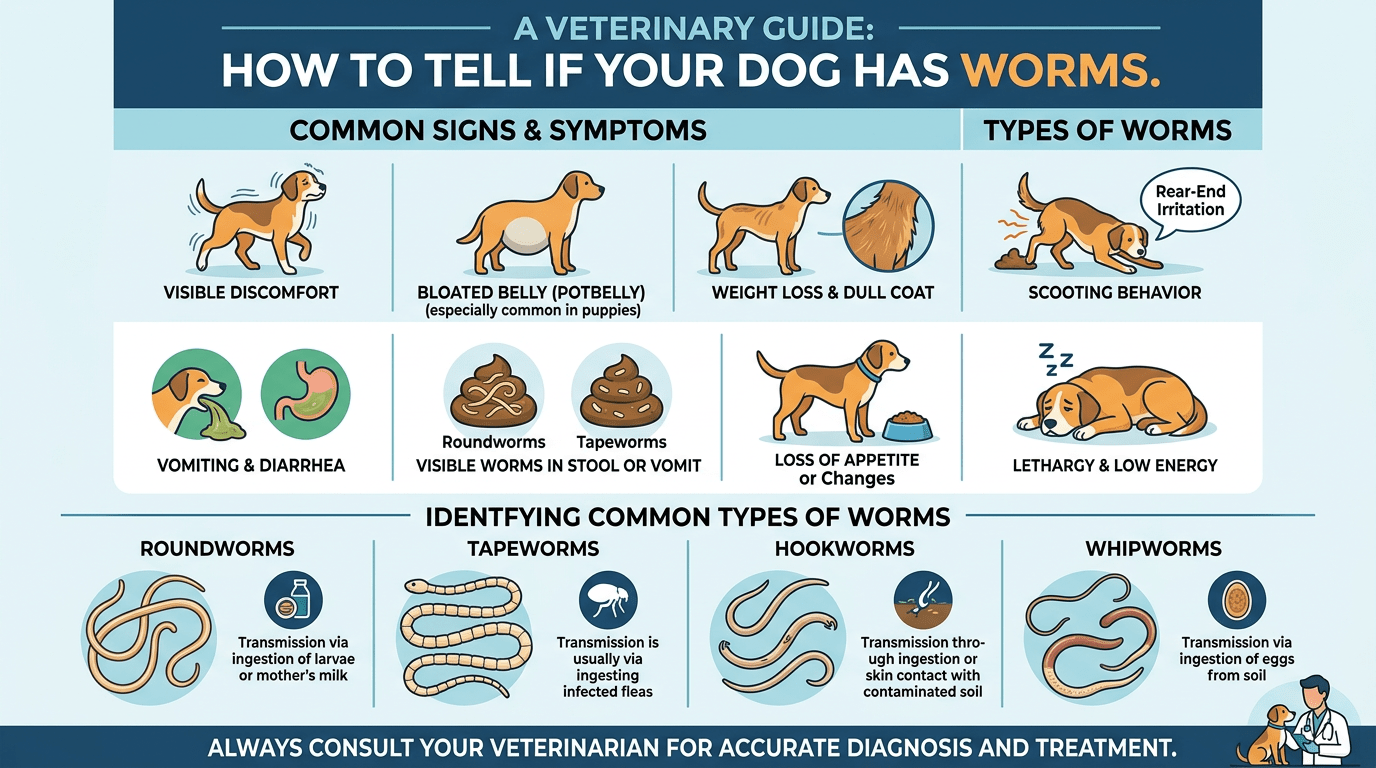
7 Warning Signs Your Dog May Have Worms
1. Scooting or Dragging the Rear
Dogs sometimes drag their bottom across the floor to relieve itching around the anus.
This behavior is commonly associated with tapeworm infections.
2. Visible Worms in Stool
One of the clearest signs of worms is seeing them in your dog’s feces.
They may appear as:
- White spaghetti-like worms
- Rice-grain segments
- Thin thread-like parasites
3. Vomiting
Some worm infections irritate the digestive tract, leading to vomiting.
If vomiting occurs repeatedly, consult a veterinarian.
4. Weight Loss Despite Normal Appetite
Worms feed on nutrients inside the dog’s digestive system.
This may lead to gradual weight loss.
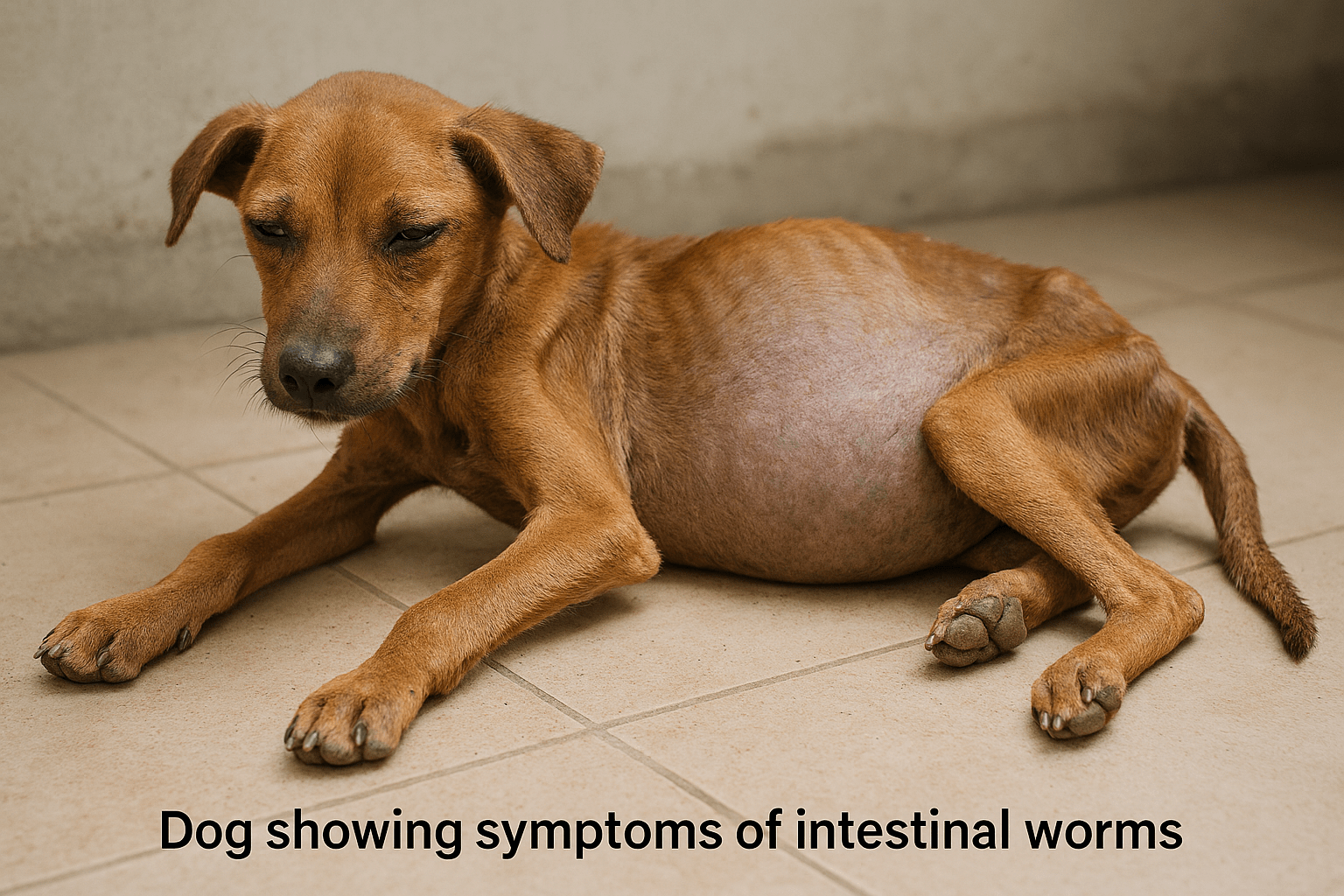
5. Bloated Belly in Puppies
Puppies infected with roundworms often develop a characteristic “pot-bellied” appearance.
6. Diarrhea
Parasites can irritate the intestinal lining and cause loose stools.
7. Dull Coat and Poor Growth
Chronic worm infections may lead to nutritional deficiencies.
Common Types of Worms in Dogs
Roundworms
Roundworms are the most common intestinal parasite in puppies.
They are long, spaghetti-shaped worms that live in the intestines.
Tapeworms
Tapeworms are transmitted through fleas.
Segments of tapeworms resemble small grains of rice around the dog’s anus.
Hookworms
Hookworms attach to the intestinal wall and feed on blood.
Severe infections can cause anemia.
Whipworms
Whipworms infect the large intestine and may cause chronic diarrhea.
Heartworms
Heartworms are transmitted by mosquitoes and affect the heart and lungs.
This disease can be life-threatening if untreated.
How Veterinarians Diagnose Worms
Veterinarians diagnose worm infections using several methods:
- Fecal examination
- Microscopic parasite identification
- Blood tests for heartworm
If you notice symptoms, you can book an online vet consultation at MyFurries for guidance on testing and treatment.
Treatment Options for Dog Worms
Fortunately, most worm infections are treatable with proper medication.
Veterinarians may prescribe:
- Deworming tablets
- Liquid antiparasitic medications
- Topical parasite treatments
Always follow veterinary instructions carefully.
How Often Should Dogs Be Dewormed?
Typical deworming schedules include:
- Puppies: every 2–3 weeks initially
- Adult dogs: every 3 months
- High-risk dogs: monthly prevention
Preventing Worm Infections
Prevention is the best strategy.
- Regular deworming
- Flea prevention
- Clean living areas
- Safe food and water
When to Seek Veterinary Help
You should consult a veterinarian if your dog shows:
- Persistent vomiting
- Bloated abdomen
- Severe diarrhea
- Extreme lethargy
Early treatment prevents complications.
You can book a MyFurries online vet consult to discuss symptoms and treatment options.
Final Thoughts
Worm infections are common but preventable.
Regular deworming, parasite control, and veterinary guidance ensure your dog stays healthy.
If you suspect worms, do not wait. Early treatment protects your dog from complications.