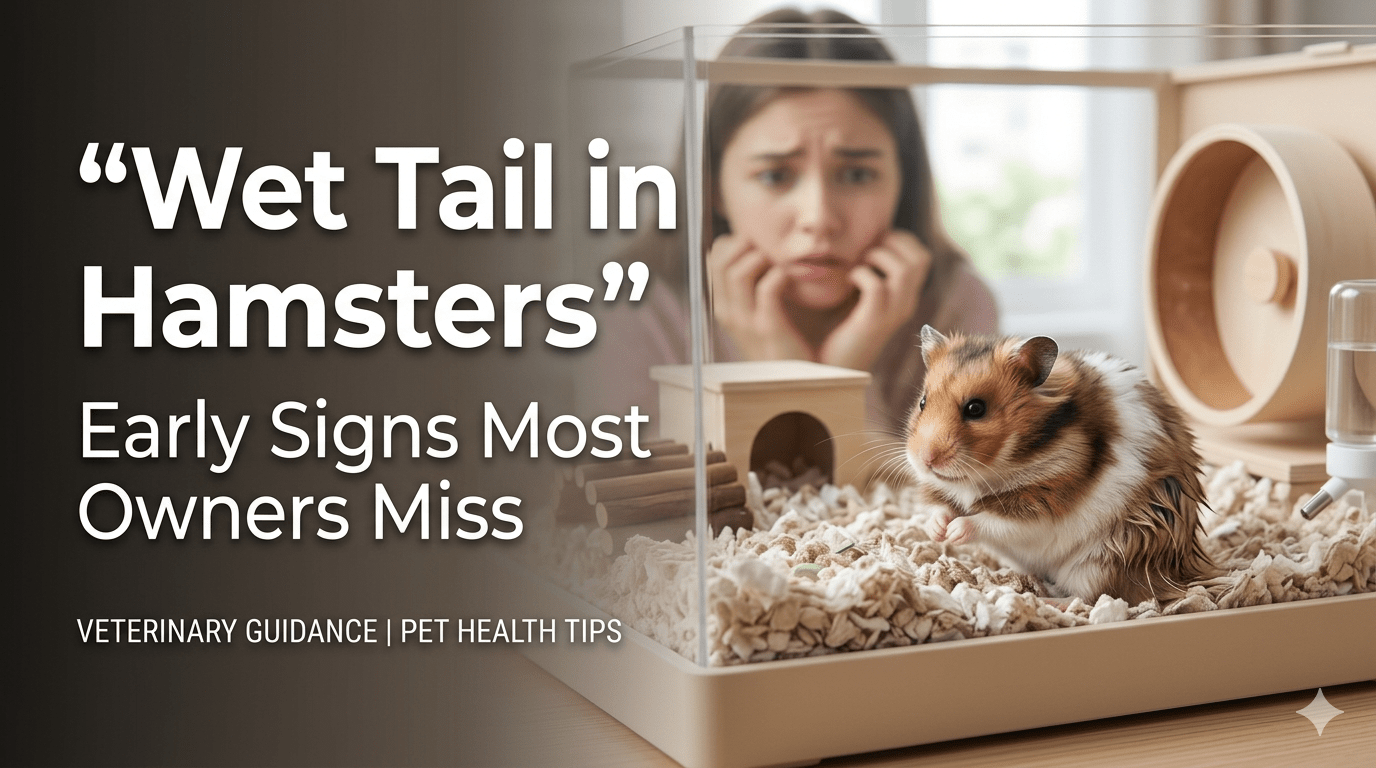
Wet tail is one of the deadliest illnesses seen in pet hamsters. Unfortunately, many hamster owners recognize the disease too late. By the time severe diarrhea appears, the hamster may already be critically ill.
The good news is that early signs often appear before the condition becomes fatal. Recognizing those subtle symptoms can save your hamster’s life.
🚨 Wet Tail Emergency Warning Signs
- Wet or dirty fur around tail
- Strong foul smell
- Refusing food or water
- Sunken eyes
- Severe lethargy
- Hunched body posture
- Rapid dehydration
What Is Wet Tail?
Wet tail is a severe intestinal infection commonly linked with stress and bacterial overgrowth. It is especially common in young Syrian hamsters but can affect other species too.
The medical condition is often associated with Lawsonia intracellularis bacteria and severe gastrointestinal inflammation.
Early Signs Owners Commonly Miss
1. Reduced Activity
Hamsters naturally sleep during the day, so owners may overlook reduced movement. A hamster becoming unusually inactive at night may be an early warning sign.
2. Mild Appetite Loss
One of the earliest signs of wet tail is reduced interest in food. Owners often notice untouched treats or reduced hoarding behavior.
3. Slightly Damp Tail Fur
At first, the tail area may look only mildly damp instead of severely dirty.
4. Irritability
Sick hamsters may bite more, hide frequently, or avoid interaction.
5. Weight Loss
Rapid weight loss is a critical sign that infection is progressing.
What Causes Wet Tail?
- Stress from relocation
- Overcrowded cages
- Poor hygiene
- Sudden diet changes
- Weak immune system
- Improper temperature
How Fast Does Wet Tail Progress?
Wet tail can become fatal within 24–48 hours if left untreated. This is why immediate veterinary care is crucial.
Home Care Support
While veterinary treatment is essential, you can support your hamster by:
- Keeping the cage warm and dry
- Removing stressors
- Providing hydration support
- Cleaning dirty bedding immediately
Never attempt home antibiotics without veterinary advice.
When To See a Vet
See an exotic pet veterinarian immediately if your hamster has:
- Diarrhea
- Wet fur near tail
- Stopped eating
- Weakness or dehydration
- Sudden collapse
Book Online Exotic Vet Consultation
Hamster Symptom Checker
Not sure if your hamster has wet tail? Use the MyFurries online symptom checker and connect with an exotic pet expert.