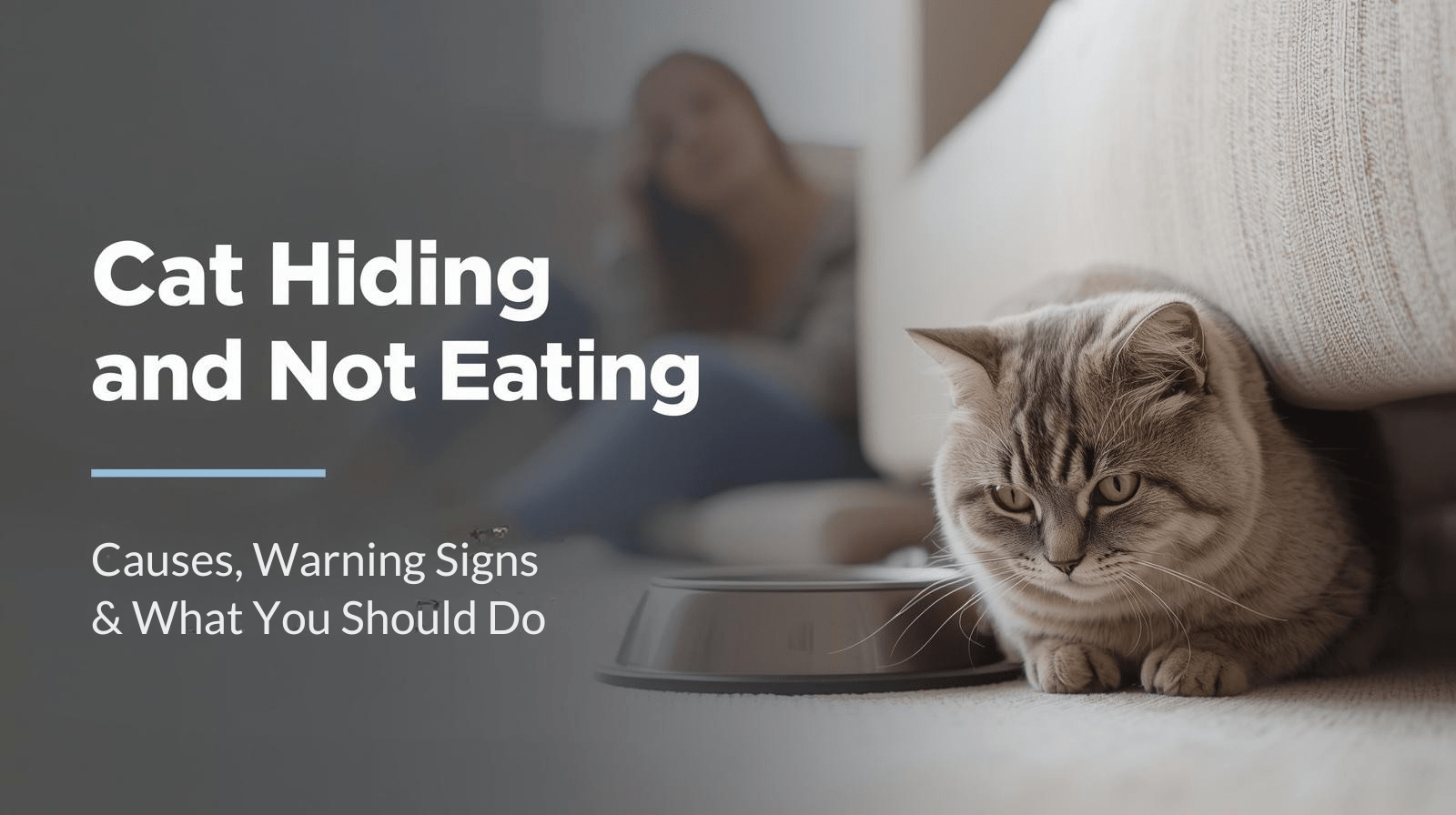
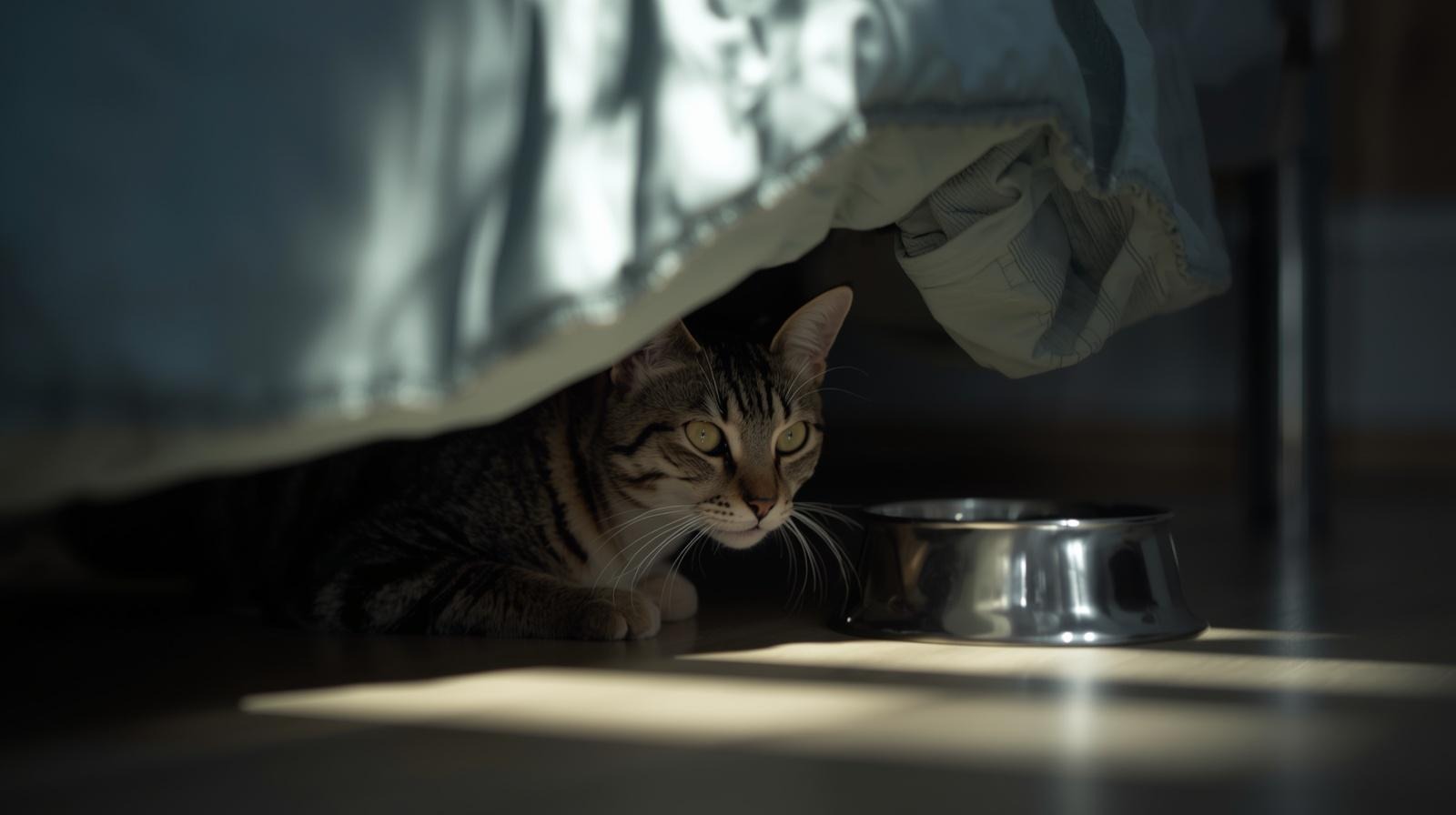
If your cat is hiding and not eating, it is often a sign of stress, illness, or pain. Cats instinctively hide when they feel unwell, and loss of appetite alongside this behavior is a strong indicator that something is wrong and needs attention.
What Does It Mean When a Cat Is Hiding and Not Eating?
This combination of symptoms usually signals that your cat is either emotionally stressed or physically unwell. Cats are naturally private animals and tend to withdraw when they feel vulnerable.
Mild Situations
- Recent environmental change
- New pet or visitor in the home
- Loud noises or disturbances
Serious Conditions
- Infections or fever
- Pain (injury, dental issues)
- Gastrointestinal problems
- Kidney or liver disease
Common Triggers
- Stress or anxiety
- Illness or discomfort
- Change in routine
- Trauma or injury
Common Causes
Common causes include:
- Stress due to environmental changes
- Infections (viral or bacterial)
- Pain or injury
- Digestive issues
- Kidney disease
- Liver disease
- Toxins or poisoning
- Post-vaccination discomfort
Most Searched Questions & Answers
Why is my cat hiding and not eating suddenly?
This may indicate stress or sudden illness and should be monitored closely.
My cat is hiding and won’t come out to eat—what should I do?
Provide a quiet space and observe, but seek help if it continues beyond 24 hours.
Why is my cat lethargic, hiding, and not eating?
This is a strong sign of illness and requires veterinary attention.
Is it normal for cats to hide when sick?
Yes, hiding is a natural instinct when cats feel unwell.
Why is my cat not eating and sleeping all day?
This could indicate infection, pain, or systemic disease.
My cat is hiding after a new pet—should I worry?
This may be stress-related, but appetite loss should not be ignored.
When Is This an Emergency?
- No food intake for more than 24 hours
- Extreme lethargy or weakness
- Vomiting or diarrhea
- Rapid breathing
- Signs of pain (crying, aggression)
- Weight loss or dehydration
These signs indicate a potentially serious condition—consult a veterinarian immediately.
Home Care Tips for Mild Cases
- Create a quiet, safe resting space
- Offer favorite or warm food
- Ensure fresh water availability
- Avoid forcing interaction
- Minimize stress triggers
How Veterinarians Diagnose the Problem
Veterinarians may use:
- Physical examination
- Blood tests
- Urine analysis
- X-rays or ultrasound
- Behavioral assessment
These help identify whether the issue is medical or behavioral.
Prevention Tips
- Maintain a stable home environment
- Introduce changes gradually
- Schedule regular vet check-ups
- Provide mental stimulation
- Monitor eating habits daily
Talk to a Vet Online – Get Expert Help
If your cat is hiding and not eating, early intervention can prevent serious health complications.
MyFurries veterinarians are available for online consultations to assess symptoms and guide treatment from the comfort of your home.
Related Pet Health Guides
Frequently Asked Questions
Do cats hide when they are sick?
Yes, it is a natural instinct to hide when unwell.
How long can a cat go without eating?
24–48 hours before serious risks develop.
Should I force my cat out of hiding?
No, this may increase stress.
Can stress alone cause a cat to stop eating?
Yes, but prolonged loss of appetite is dangerous.
Is hiding always a bad sign?
Not always, but combined with not eating, it is concerning.
When should I call a vet?
If symptoms persist beyond 24 hours or worsen.
Author & Review
Reviewed by Dr. Vinay Chhabra
Chief Veterinary Officer – MyFurries