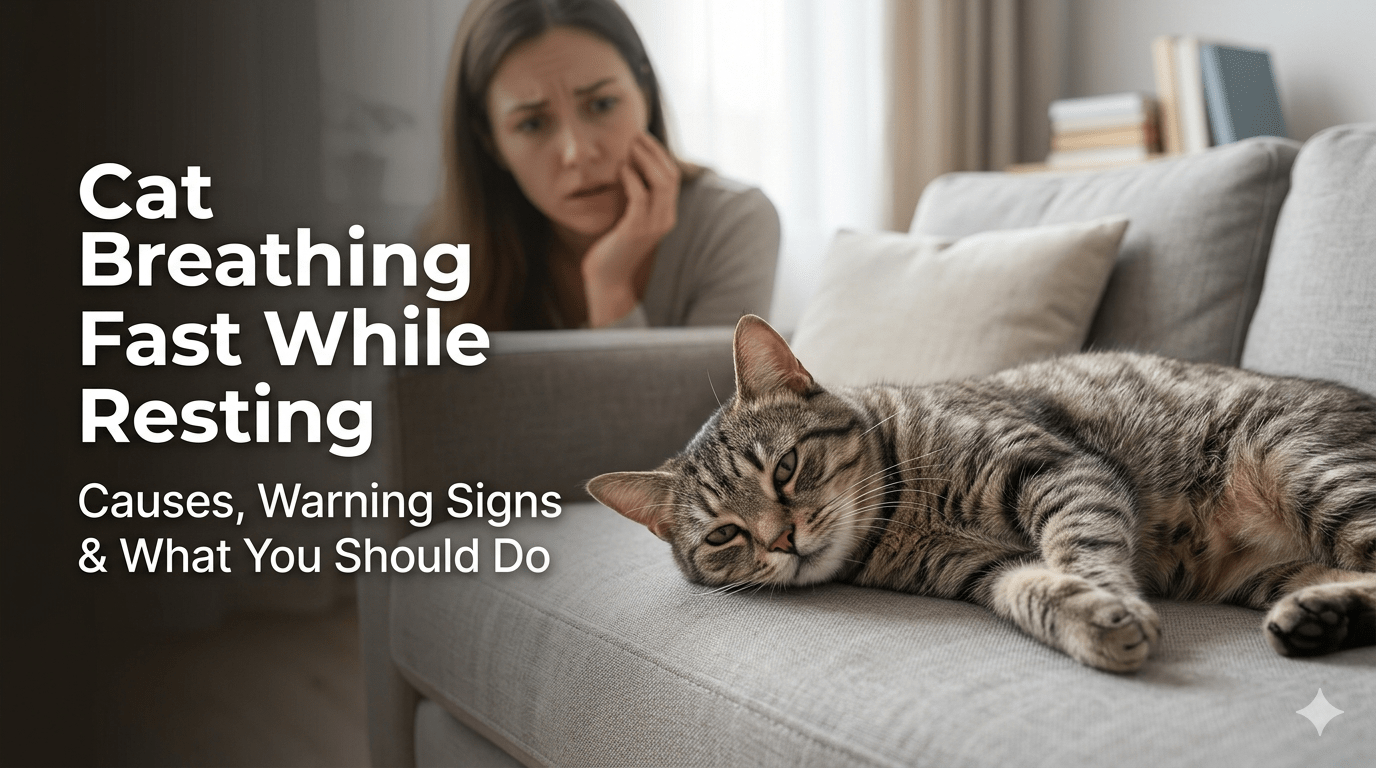
If your cat is breathing fast while resting, it may indicate respiratory distress, pain, stress, or an underlying medical condition. While brief increases in breathing rate can be normal, persistent rapid breathing (over 30–40 breaths per minute at rest) is often a warning sign that requires immediate attention.
What Does Fast Breathing in a Resting Cat Mean?
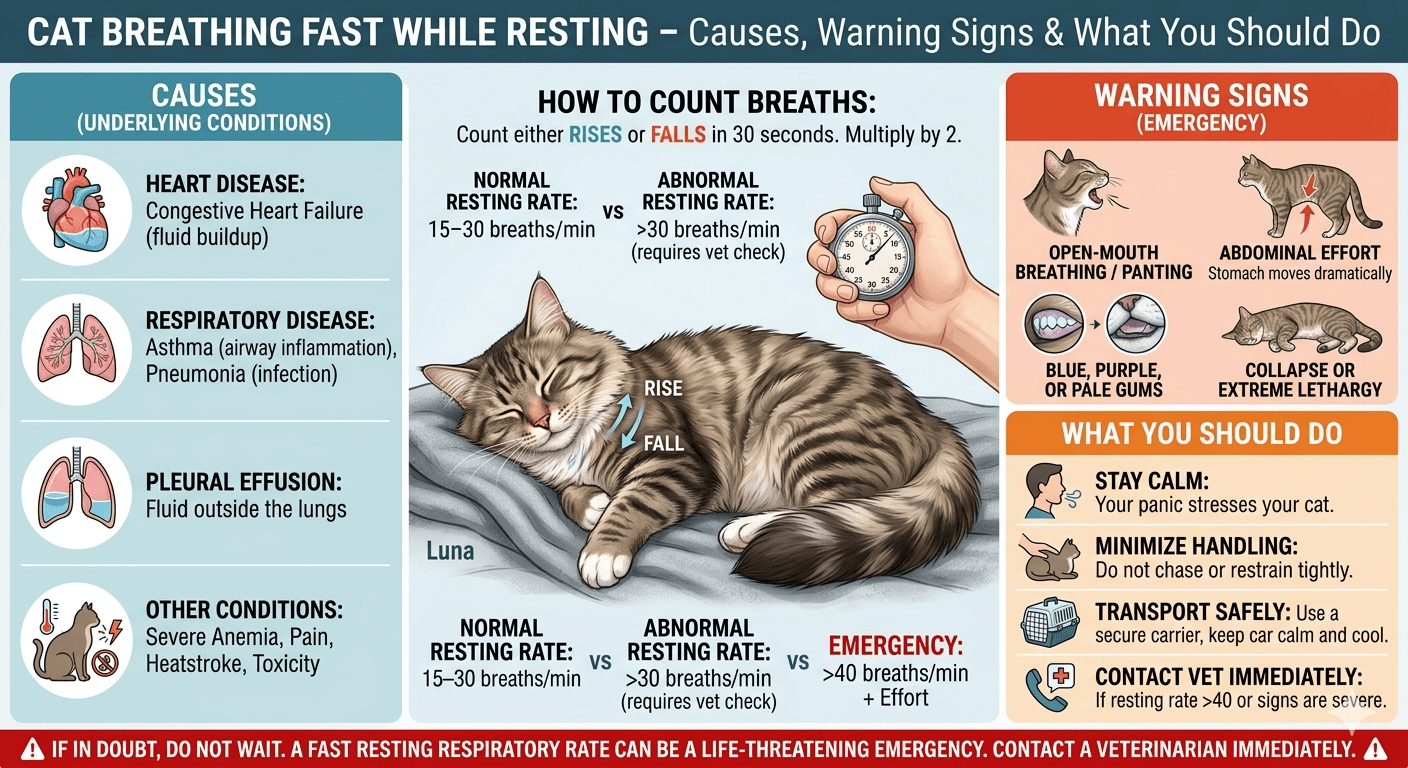
Normal resting breathing for cats is typically 20–30 breaths per minute. Anything consistently above this range may indicate a problem affecting the lungs, heart, or overall health.
Mild Situations
- Recent activity or play
- Stress or anxiety
- Heat or environmental factors
Serious Conditions
- Respiratory infections
- Heart disease
- Fluid in lungs (pulmonary edema)
- Pain or trauma
- Anemia
Common Triggers
- Infection
- Allergies
- Heatstroke
- Toxins
Common Causes
Common causes include:
- Respiratory infections
- Asthma in cats
- Heart disease
- Fluid buildup in chest or lungs
- Pain or injury
- Heatstroke
- Stress or anxiety
- Anemia
Most Searched Questions & Answers
How fast is too fast for a cat’s breathing?
More than 30–40 breaths per minute at rest is considered abnormal.
Why is my cat breathing fast but acting normal?
This could be early-stage illness or stress—monitor closely.
My cat is breathing fast while sleeping—should I worry?
Yes, breathing should be slow and steady during sleep.
Is fast breathing in cats an emergency?
It can be, especially if persistent or accompanied by other symptoms.
Why is my cat breathing heavily with mouth open?
This is a serious emergency and requires immediate veterinary care.
Can stress cause rapid breathing in cats?
Yes, but it should resolve quickly once the cat calms down.
When Is This an Emergency?
- Breathing rate consistently above 40 breaths per minute
- Open-mouth breathing or panting
- Blue or pale gums
- Lethargy or collapse
- Refusal to eat or drink
- Wheezing or coughing
This can be life-threatening—seek veterinary help immediately.
Home Care Tips (Only for Mild Cases)
- Keep your cat calm and stress-free
- Move to a cool, well-ventilated area
- Monitor breathing rate regularly
- Avoid handling if breathing is labored
- Do not delay seeking help if symptoms persist
How Veterinarians Diagnose the Problem
Veterinarians may perform:
- Physical examination
- Chest X-rays
- Blood tests
- Oxygen level assessment
- Ultrasound or ECG for heart evaluation
Rapid diagnosis is critical in respiratory cases.
Prevention Tips
- Regular health check-ups
- Keep vaccinations up to date
- Avoid exposure to heat and toxins
- Monitor breathing during rest
- Maintain a stress-free environment
Talk to a Vet Online – Get Immediate Guidance
If your cat is breathing fast while resting, do not wait—this could be serious.
MyFurries veterinarians are available for urgent online consultations to guide you on immediate next steps.
Related Pet Health Guides
- Cat Hiding and Not Eating
- Cat Not Eating but Drinking Water
- Cat Vomiting Hairballs Frequently
- Cat Itching Ears
Frequently Asked Questions
What is a normal breathing rate for cats?
20–30 breaths per minute at rest.
Is fast breathing always serious?
Not always, but it should never be ignored.
Can heat cause rapid breathing?
Yes, especially in hot environments.
Should I wait and watch?
Only briefly—persistent symptoms require immediate attention.
Can anxiety cause fast breathing?
Yes, but it should resolve quickly.
When should I call a vet?
Immediately if breathing is rapid, labored, or abnormal.
Author & Review
Reviewed by Dr. Vinay Chhabra
Chief Veterinary Officer – MyFurries