A budgie that stays fluffed up all day is often trying to conserve body heat due to illness, weakness, or stress. While occasional feather fluffing is normal behavior, constant puffing—especially when combined with lethargy or reduced appetite—can indicate a serious health problem that requires immediate attention.
Budgies (parakeets) are prey animals and instinctively hide illness. By the time visible symptoms like fluffing appear, the condition may already be advanced. This is why early recognition and quick action are critical for your bird’s survival.
What Does It Mean When a Budgie Is Fluffed Up All Day?
Budgies fluff their feathers for several reasons, but the context and duration matter greatly.
Feather fluffing helps birds:
- Trap warm air and regulate body temperature
- Relax during sleep
- Respond to environmental changes
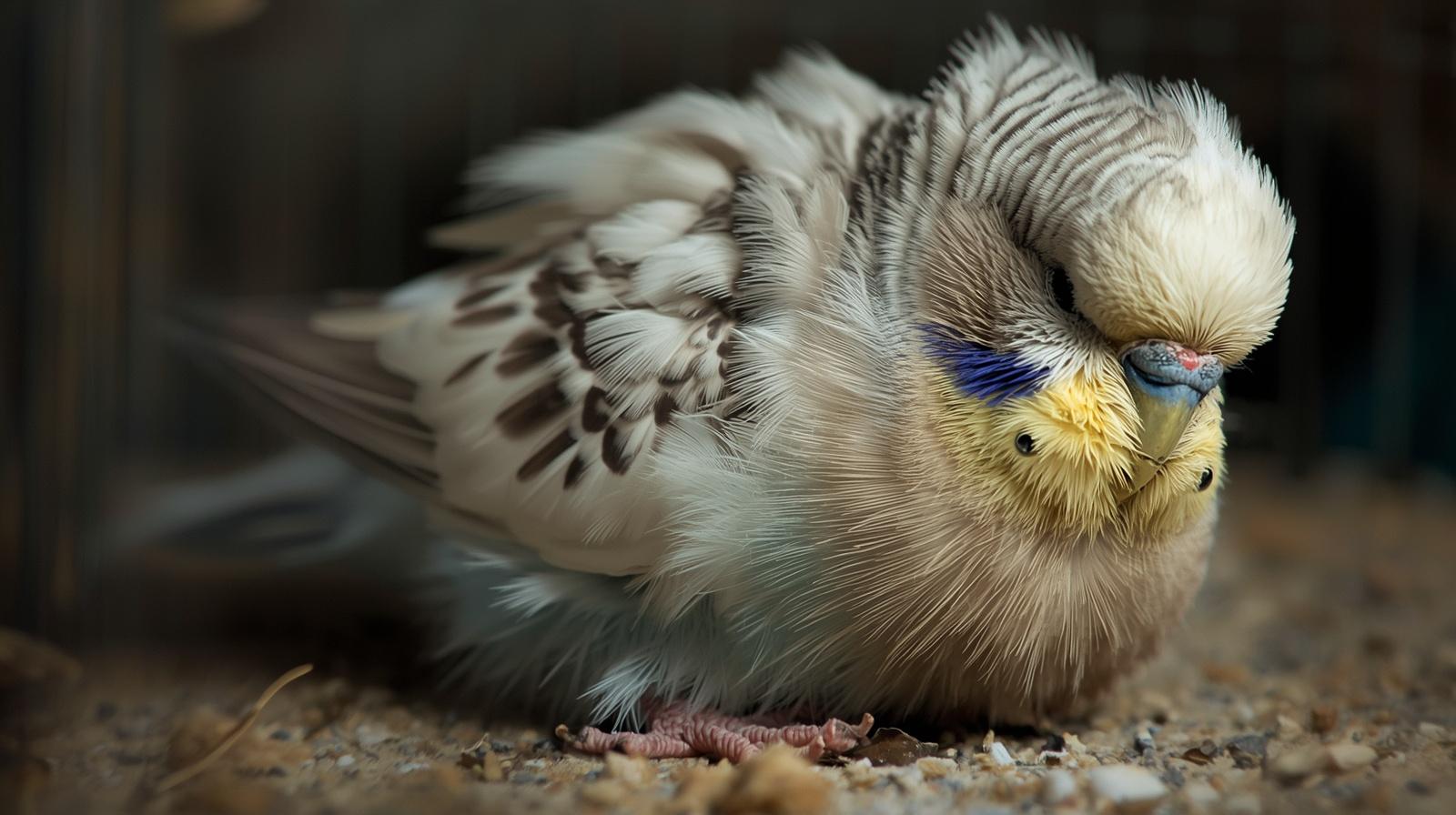
However, when a budgie remains puffed up continuously throughout the day, it usually signals:
- Illness: The most common cause—birds fluff to conserve heat when weak
- Cold stress: Attempting to stay warm in low temperatures
- Fatigue or lethargy: Low energy levels due to underlying issues
- Pain or discomfort: A coping mechanism
Normal vs Abnormal Fluffing
- Normal: Brief fluffing during rest or sleep
- Abnormal: Staying fluffed up all day with reduced activity
If your budgie looks like a “puffed ball” for hours and isn’t active, this is not normal behavior.
Common Causes of a Budgie Being Fluffed Up All Day
Understanding the root cause helps determine whether the situation is mild or serious.
Common causes include:
- Respiratory infections – Difficulty breathing often leads to puffing
- Bacterial or viral infections – Systemic illness weakens the bird
- Cold environment – Temperatures below comfort range
- Malnutrition – Poor diet leads to low energy
- Parasites – External or internal infections
- Stress – New environment, loud noise, or isolation
- Toxin exposure – Fumes from non-stick cookware, perfumes, smoke
- Digestive issues – Internal discomfort
In most real-world cases, fluffing is not an isolated symptom—it is part of a broader illness pattern.
Panic Search Questions Bird Owners Ask
Why is my budgie fluffed up and not moving?
This is a strong indicator of illness or weakness. Immediate veterinary consultation is recommended.
Why is my budgie puffed up but eating?
This may be an early-stage illness. Continue monitoring closely as symptoms can worsen quickly.
Why is my budgie fluffed up and sleeping all day?
This usually indicates lethargy caused by infection, stress, or internal disease.
Why is my budgie fluffed up and breathing fast?
This is a serious warning sign of respiratory distress and requires urgent care.
Why is my budgie fluffed up after bath?
This can be normal temporarily as the bird dries and regulates body temperature.
Why is my new budgie always fluffed up?
Stress from relocation is common, but prolonged puffing suggests health concerns.
Why is my budgie sitting at the bottom of the cage puffed up?
This is an emergency situation and often indicates severe illness.
When Is This an Emergency?
If your budgie is fluffed up all day along with any of the following symptoms, seek veterinary help immediately:
- Not eating or drinking
- Sleeping excessively
- Sitting at the bottom of the cage
- Rapid or labored breathing
- Closed or half-closed eyes
- Weight loss or weakness
- Tail bobbing while breathing
- Unresponsiveness
Important: Birds can deteriorate very quickly. Delaying treatment even by 24 hours can be life-threatening.
Home Care Tips for Mild Cases
If your budgie is mildly fluffed but still active and eating, you can try supportive care:
- Maintain warmth: Keep temperature around 28–30°C
- Reduce stress: Keep environment quiet and calm
- Ensure clean food and water: Fresh supply daily
- Monitor closely: Watch for changes every few hours
- Provide proper nutrition: Balanced seed and pellet diet
However, if symptoms persist beyond 24 hours, veterinary consultation is essential.
How Veterinarians Diagnose the Problem
Diagnosing illness in birds requires careful evaluation due to their subtle symptoms.
Veterinarians may perform:
- Physical examination
- Weight measurement
- Fecal analysis
- Blood tests
- X-rays (in severe cases)
Early diagnosis significantly improves recovery outcomes.
Prevention Tips to Keep Your Budgie Healthy
- Maintain a consistent, balanced diet
- Keep cage clean and hygienic
- Avoid sudden environmental changes
- Ensure proper ventilation (no fumes)
- Regularly observe behavior changes
- Schedule periodic vet checkups
Prevention is always easier than treatment when it comes to birds.
Talk to a Bird Vet Online
If your budgie is fluffed up all day, don’t wait for symptoms to worsen.
MyFurries offers access to experienced veterinarians who can evaluate your bird’s condition and guide you immediately.
👉 Book an Online Vet Consultation Now
Related Pet Health Guides
Frequently Asked Questions
Is it normal for a budgie to stay fluffed up all day?
No, constant fluffing usually indicates illness or stress.
Can a cold cause a budgie to puff up?
Yes, budgies fluff feathers to conserve heat in cold environments.
How do I know if my budgie is sick?
Signs include fluffing, lethargy, loss of appetite, and breathing changes.
Should I isolate a sick budgie?
Yes, to prevent stress and monitor behavior closely.
How quickly can a budgie recover?
With early treatment, recovery can be fast. Delay worsens prognosis.
Can stress alone cause fluffing?
Yes, but prolonged fluffing should always be evaluated.
What temperature is ideal for budgies?
Between 24–30°C is comfortable.
When should I see a vet?
If symptoms last more than 24 hours or worsen.
Reviewed by Dr. Vinay Chhabra
Chief Veterinary Officer – MyFurries