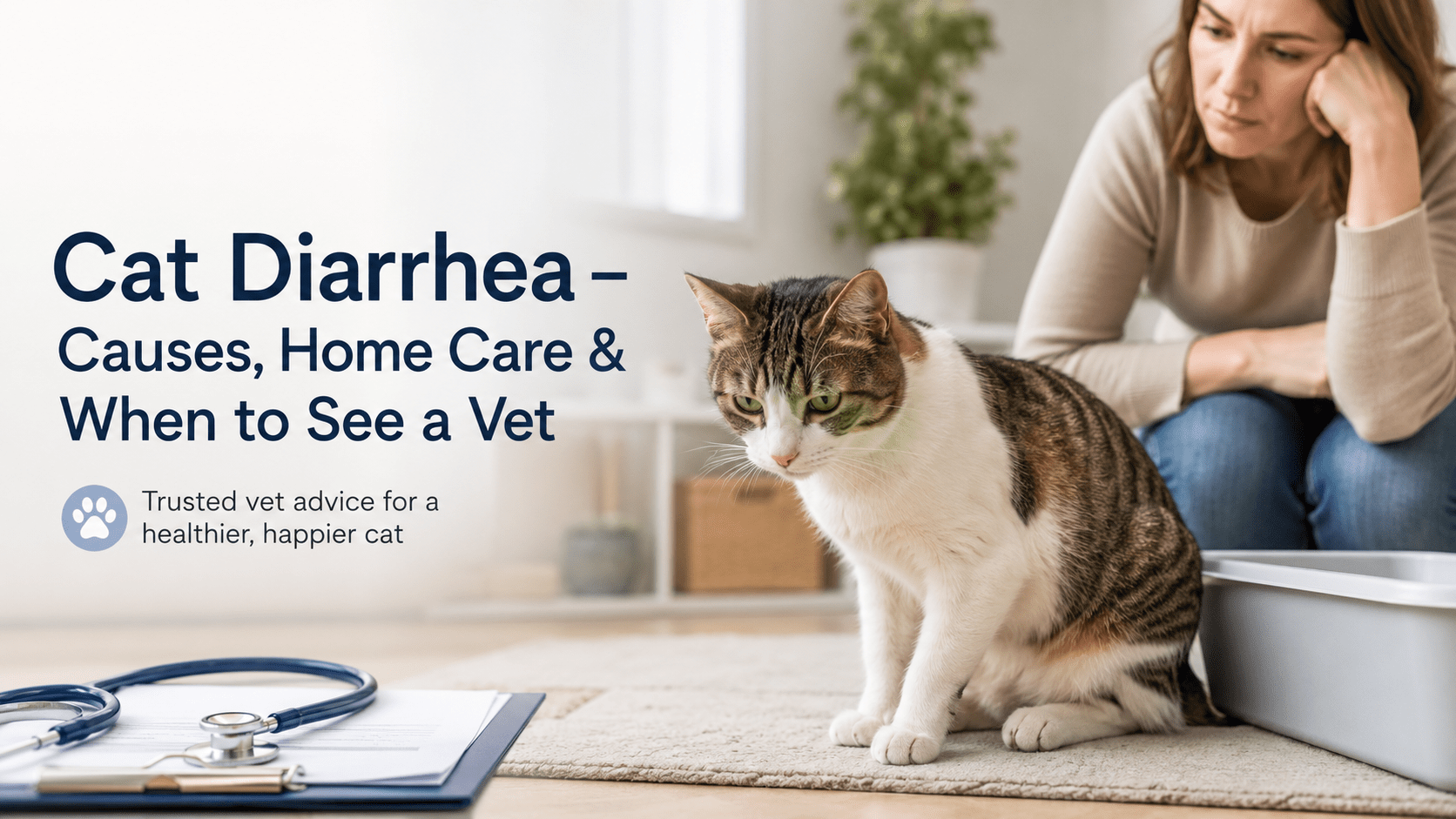
Cat diarrhea is one of the most common digestive problems seen in pets.
Many cats may experience occasional loose stool due to diet changes or mild stomach upset. However, persistent diarrhea may indicate infection, parasites or a more serious health condition.
Understanding the causes and warning signs can help pet parents respond quickly and keep their cat safe.
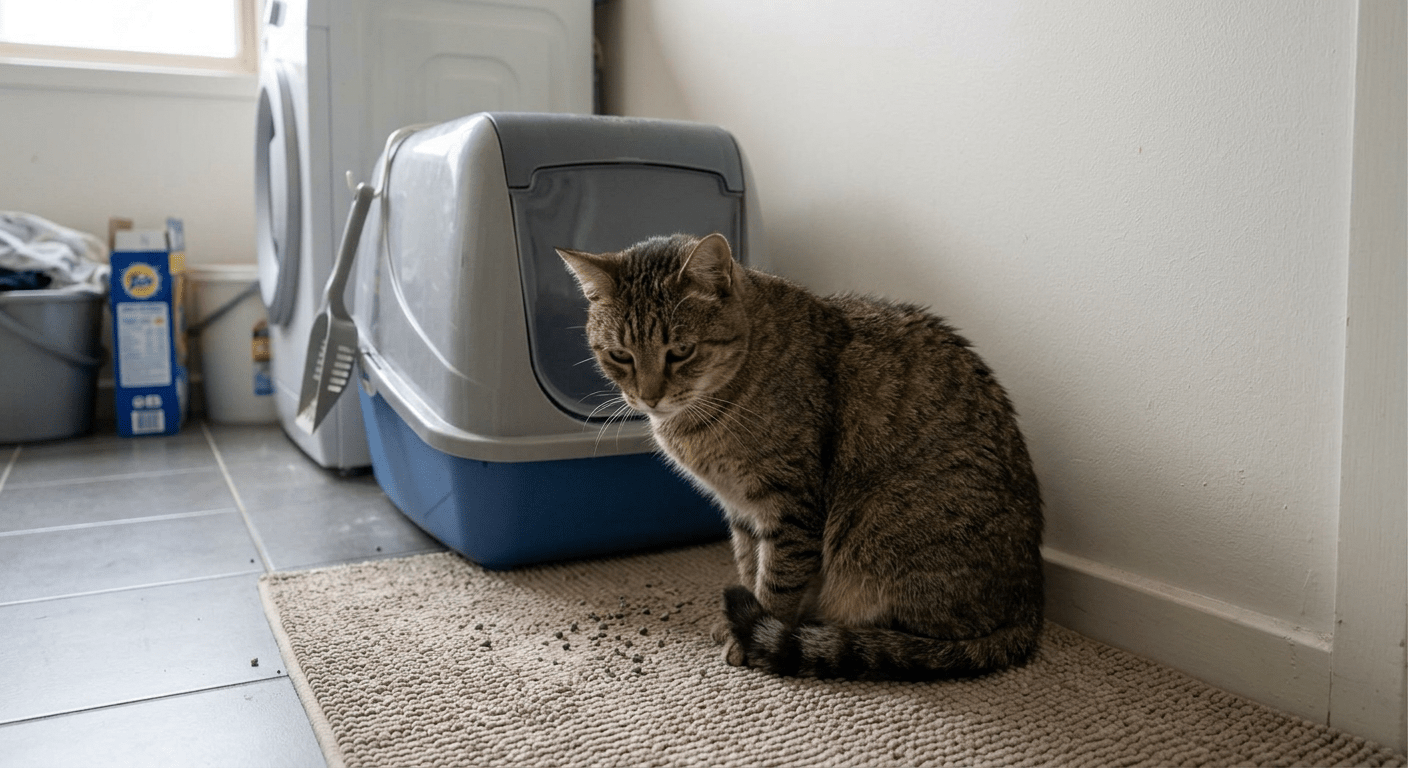
What Is Diarrhea in Cats?
Diarrhea refers to frequent loose or watery stools.
It occurs when food passes through the digestive tract too quickly or when the intestines cannot properly absorb water.
Cats with diarrhea may also experience:
- Frequent trips to the litter box
- Soft or watery stool
- Bad-smelling feces
- Urgency when defecating
Common Causes of Cat Diarrhea
There are several reasons why a cat may develop diarrhea.
1. Sudden Diet Change
Changing a cat’s food abruptly can upset the digestive system.
Cats have sensitive stomachs and should transition gradually to new foods.
2. Food Intolerance
Some cats react poorly to certain ingredients such as dairy products, artificial additives or specific proteins.
3. Parasites
Intestinal parasites are a common cause of diarrhea, particularly in kittens.
Common parasites include:
- Roundworms
- Hookworms
- Giardia
- Coccidia
4. Bacterial or Viral Infection
Infections can inflame the digestive tract and cause severe diarrhea.
Examples include:
- Bacterial infections
- Viral gastroenteritis
- Feline panleukopenia
5. Stress
Cats are sensitive to environmental changes.
Moving homes, introducing new pets or travel can sometimes trigger digestive upset.
6. Toxic Substances
Certain household substances can irritate the digestive system.
Examples include:
- Toxic plants
- Cleaning chemicals
- Human medications
Symptoms That May Accompany Diarrhea
Cats with diarrhea may also show additional symptoms.
- Vomiting
- Loss of appetite
- Lethargy
- Dehydration
- Weight loss
If these symptoms occur together, veterinary evaluation is strongly recommended.
Home Care Tips for Mild Cat Diarrhea
If your cat is otherwise active and alert, mild diarrhea may resolve with simple supportive care.
1. Provide Plenty of Fresh Water
Diarrhea can quickly lead to dehydration.
Ensure your cat always has access to clean drinking water.
2. Feed Easily Digestible Food
A bland diet may help the digestive system recover.
Some veterinarians recommend easily digestible wet food during recovery.
3. Monitor Litter Box Activity
Keep track of how frequently your cat uses the litter box.
Changes in stool frequency or consistency may indicate worsening illness.
4. Reduce Stress
A quiet and comfortable environment can help a cat recover faster.
How Long Should Diarrhea Last?
Mild diarrhea often resolves within 24 hours.
If diarrhea continues longer than one day, veterinary advice should be sought.
Kittens and older cats are particularly vulnerable to dehydration.
Emergency Warning Signs
Contact a veterinarian immediately if your cat shows any of the following symptoms:
- Blood in stool
- Persistent vomiting
- Severe weakness
- High fever
- Refusal to eat or drink
- Signs of dehydration
These symptoms may indicate a serious medical condition.
👉 Book an Online Vet Consultation
How Veterinarians Diagnose Cat Diarrhea
Veterinarians may recommend several diagnostic tests to identify the cause.
- Physical examination
- Fecal parasite test
- Blood tests
- Urine analysis
- X-rays or ultrasound
Accurate diagnosis helps ensure effective treatment.
Treatment Options
Treatment depends on the underlying cause.
Veterinary treatment may include:
- Fluid therapy
- Anti-diarrheal medication
- Antibiotics
- Deworming medication
- Prescription digestive diets
Preventing Diarrhea in Cats
Pet parents can reduce the risk of digestive problems by following simple care practices.
- Transition food gradually
- Maintain regular deworming schedules
- Provide clean drinking water
- Keep toxic substances away
- Schedule routine veterinary checkups
When to Seek Veterinary Advice
You should contact a veterinarian if:
- Diarrhea lasts longer than 24 hours
- Your cat appears weak or lethargic
- Vomiting occurs along with diarrhea
- Your cat stops eating
Early veterinary care can prevent complications and help your cat recover quickly.