
As a cat parent, you are finely tuned to your feline companion’s subtle behaviors.
You know the exact cadence of their purr, the meaning of every meow, and the rhythm of their normal sleep-breathing. That’s why seeing your cat exhibit heavy breathing with an open mouth is one of the most alarming sights you can witness.
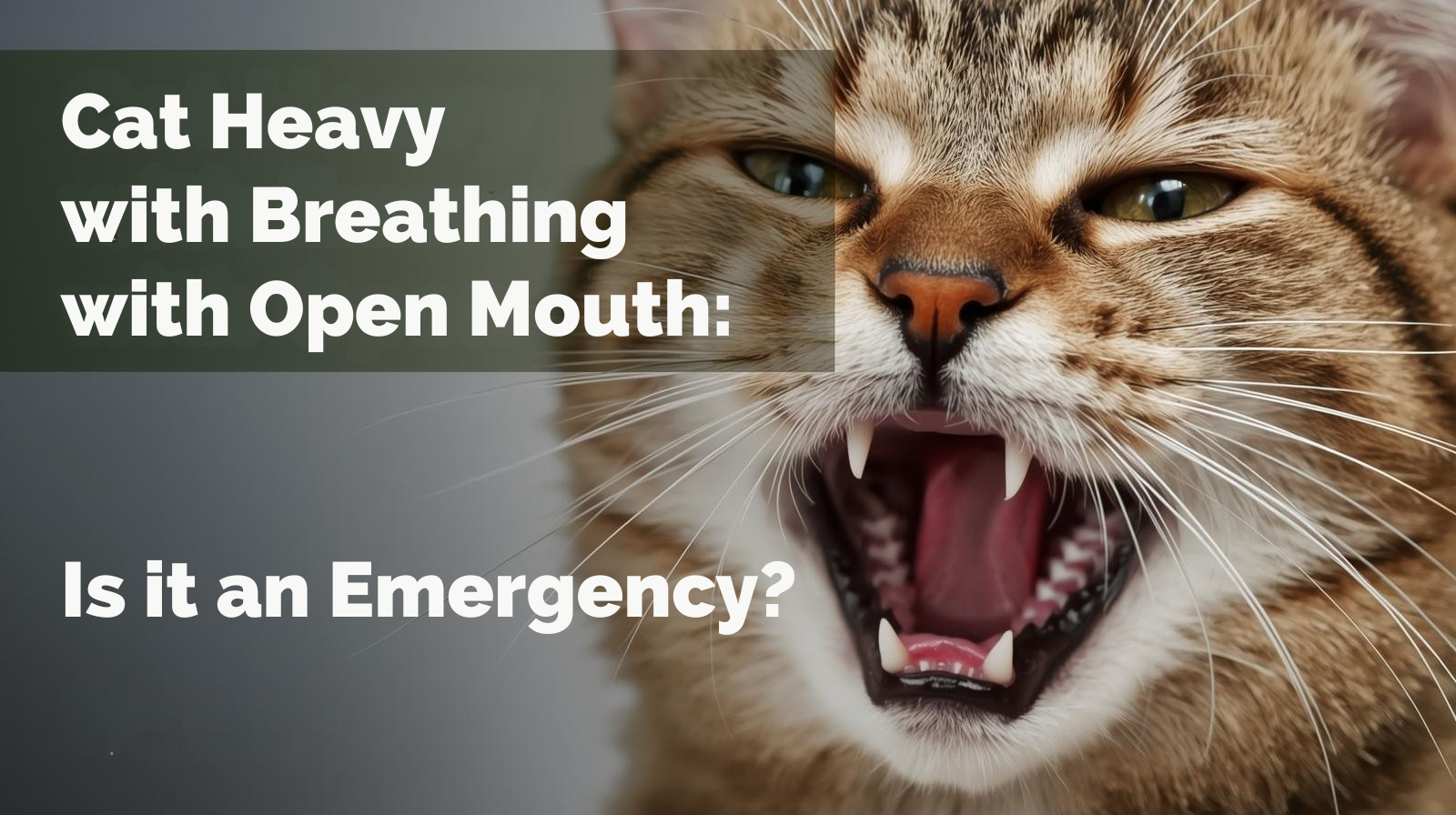
Unlike dogs, who commonly pant to cool down, open-mouth breathing (panting) in a cat is rarely normal and should almost always be treated as a medical emergency. This behavior signals that your cat is struggling to take in enough oxygen—a state known as respiratory distress or dyspnea.
Understanding the gravity of this symptom and knowing how to respond quickly can be life-saving.
The Critical Distinction: When Open-Mouth Breathing is an Emergency
In the vast majority of cases, open-mouth breathing or panting in a cat is a red flag indicating they are in distress and require immediate veterinary attention.
When is it NOT an Immediate Emergency? (Rare Exceptions)
There are only two main situations where a cat’s panting might be considered “normal,” and even then, it warrants monitoring:
- Extreme Exertion: A young, highly active cat may pant briefly (for less than 5 minutes) after a very intense, prolonged play session, such as chasing a laser pointer up and down the stairs.
- Severe Stress/Heat: Cats may pant during a stressful event, like a long, hot car ride, or if they are significantly overheating. The panting should stop quickly once the stressor is removed and the cat cools down.
Crucially, if the open-mouth breathing persists for more than a few minutes, or if it happens while the cat is at rest, it is an emergency.
Why It’s Always Serious
A cat relies almost entirely on nasal breathing. When they resort to open-mouth breathing, it means their primary, highly efficient breathing route is compromised, or their body simply requires a significantly higher volume of air to compensate for a serious underlying condition. They are literally fighting for breath.
The Underlying Causes of Cat Heavy Breathing Open Mouth
When your cat can’t get enough air through their nose, or when their body is starved of oxygen, a variety of serious conditions can be at fault. These conditions affect the upper airway, lower airway (lungs), or the circulatory system (heart).
I. Respiratory Tract Issues
These problems directly obstruct the flow of air.
- Feline Asthma (Chronic Bronchitis): Often a key culprit. Asthma causes the airways to narrow and swell, forcing the cat to breathe harder. Symptoms include coughing (often mistaken for a hairball), wheezing, and then open-mouth breathing during an attack.
- Respiratory Infections: Severe upper respiratory infections (like Feline Herpesvirus or Calicivirus) can cause such severe nasal congestion that the cat is forced to breathe through its mouth. This is especially dangerous as it affects their ability to smell and eat.
- Foreign Body Obstruction: Something stuck in the nose, throat, or trachea (like a piece of grass, a toy fragment, or a hairball).
- Pneumonia or Fluid in the Lungs (Pleural Effusion): Fluid buildup in or around the lungs (the pleural space) severely restricts the lungs’ ability to expand, causing extreme effort and open-mouth breathing.
II. Cardiovascular (Heart) Issues
Problems with the heart are the most life-threatening causes of heavy breathing because a failing heart cannot pump oxygenated blood efficiently.
- Heart Disease (Cardiomyopathy): The most common form is Hypertrophic Cardiomyopathy (HCM), which thickens the heart muscle, making it less efficient. A failing heart allows fluid to back up into the lungs (pulmonary edema) or chest cavity (pleural effusion), leading to respiratory distress.
- Anemia or Blood Loss: If the cat has lost a significant amount of blood, or if their red blood cells are compromised, the remaining blood cannot carry enough oxygen. The cat breathes heavily and rapidly to compensate for the lack of oxygen delivery to the tissues.
III. Systemic and Environmental Issues
- Heatstroke: Cats are very susceptible to overheating, especially long-haired or brachycephalic (flat-faced) breeds. Panting is a late sign of severe heatstroke and requires immediate cooling and veterinary care.
- Pain, Anxiety, or Shock: Severe trauma, internal bleeding, intense pain, or a state of shock (e.g., after being hit by a car or attacked) will cause rapid, heavy breathing as the body attempts to cope.
- Diaphragmatic Hernia: If the diaphragm (the muscle separating the chest and abdomen) is ruptured, organs can shift into the chest cavity, compressing the lungs.
Recognizing True Respiratory Distress in Cats
It’s vital for pet owners to know the signs of distress beyond just open-mouth breathing. A cat in respiratory crisis will exhibit several tell-tale signals:
| Symptom | Description | Severity |
| Open-Mouth Breathing | Panting, mouth hanging open (not just after intense play). | EMERGENCY |
| Increased Rate/Effort | Breathing faster than 40 breaths per minute while resting. | Urgent |
| Body Position | Head and neck extended forward, elbows splayed out from the body. Often crouched or sitting hunched (called a “sternal position”). | EMERGENCY |
| Abdominal Effort | Visible, exaggerated movement of the belly and ribs (abdominal wall) with each breath, indicating they are using accessory muscles to force air. | EMERGENCY |
| Color Change | Gums or tongue appear blue, gray, or purple (cyanosis) due to lack of oxygen. | CRITICAL EMERGENCY |
| Noise | Wheezing, crackles, gasping, or loud snoring sounds while inhaling or exhaling. | Urgent to Emergency |
| Lethargy/Hiding | Extreme weakness, collapsing, or seeking a quiet, dark place to hide. | EMERGENCY |
| Lethargy/Hiding | Extreme weakness, collapsing, or seeking a quiet, dark place to hide. | EMERGENCY |
Pro Tip: Count Your Cat’s Normal Respiratory Rate!
While your cat is asleep, count the number of times their chest rises in 15 seconds, and multiply by four. A normal resting rate is typically 15 to 30 breaths per minute. Anything consistently over 40 bpm while at rest is concerning.
Get Action: Immediate Steps to Take
If you see your cat breathing heavily with an open mouth, every second matters. Do not waste time trying to find a home remedy.
1. Stay Calm and Contact Your Vet
- Immediately call your veterinarian or the nearest pet emergency clinic. Tell them: “My cat is open-mouth breathing—I am bringing them in now.” This allows them to prepare an oxygen cage and treatment plan before you arrive.
2. Minimize Stress (The Most Important Step)
- Stress and fear dramatically increase a cat’s oxygen demand, which can push them over the edge.
- Do not chase or restrain your cat. Let them position themselves comfortably.
- Gently place them in a small, secure, top-opening carrier. Cover the carrier with a towel to create a dark, quiet, stress-free environment.
3. Manage the Environment
- Do not offer food or water (they may choke).
- If you suspect heatstroke, use lukewarm (not cold) water to gently dampen their paws and inner ears, and ensure good airflow (fan or A/C), but do not over-cool them.
- Keep the environment cool and quiet for the transport to the clinic.
⚕️ What to Expect at the Emergency Vet
When you arrive, the veterinary team will prioritize stabilizing your cat before performing extensive diagnostic work, as a detailed physical exam can cause stress.
- Oxygen Therapy: The cat will immediately be placed in an oxygen-rich environment (an oxygen cage or supplemental oxygen mask).
- Minimal Handling Exam: A quick assessment of heart rate, respiratory rate, and gum color will be done.
- Diuretics and Medications: If heart failure is strongly suspected (common in older cats), the vet may administer a diuretic (like Furosemide) to quickly pull fluid out of the lungs. They may also give bronchodilators (for asthma) or pain medication.
- Diagnostics (Once Stable): Once breathing is stabilized, the vet will proceed with diagnostics, which often include:
- Thoracic X-rays: To visualize the lungs, heart size, and check for fluid.
- Echocardiogram (Cardiac Ultrasound): To definitively diagnose heart disease.
- Bloodwork: To check for underlying systemic issues.
Final Takeaway
If you are questioning, “Why is my cat heavy breathing open mouth?” the answer is simple: They need a veterinarian immediately. Open-mouth breathing is your cat’s desperate cry for help, a visible sign that their body can no longer sustain itself with normal breathing. Quick recognition and action are the best tools you have to save your cat’s life.
Is your cat breathing heavily right now? Stop reading and call your nearest emergency animal hospital immediately.