
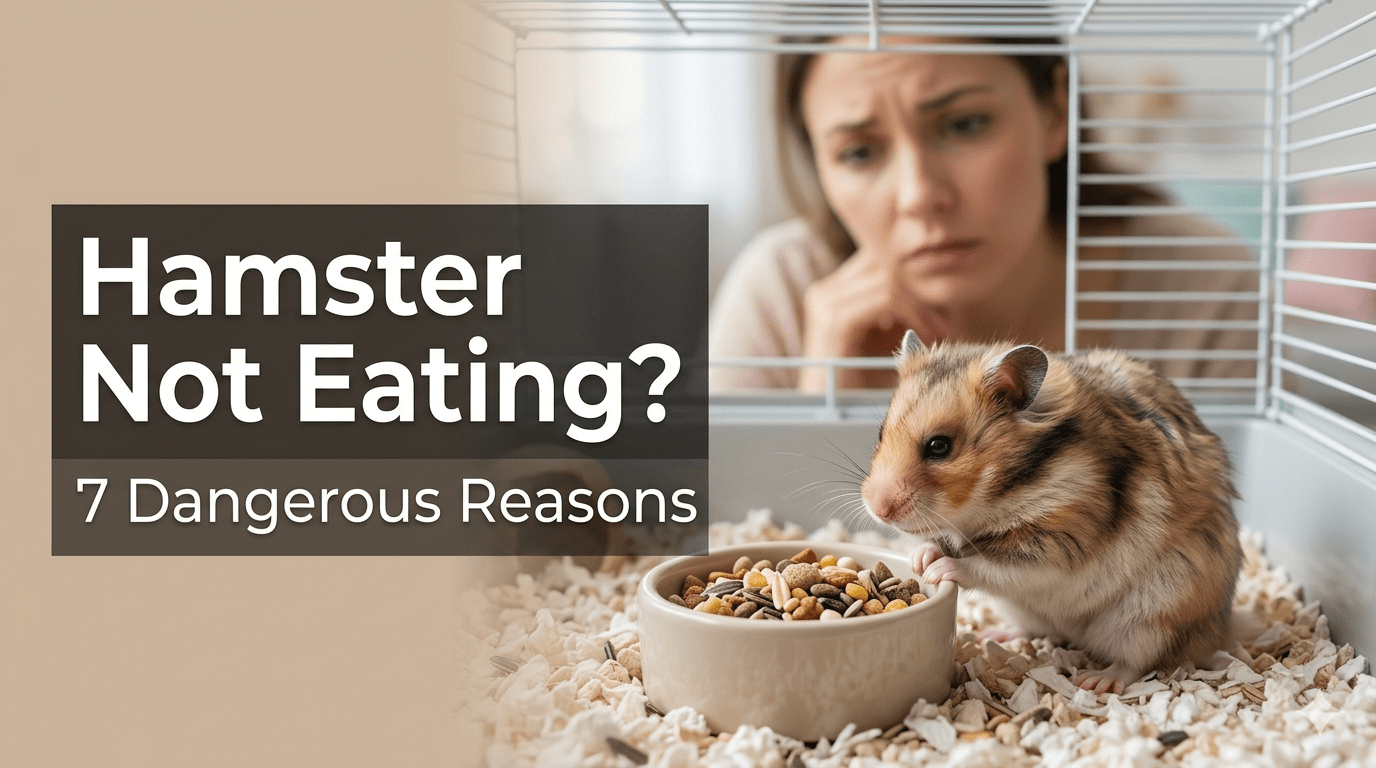
If your hamster suddenly stops eating, it should never be ignored. Hamsters have very fast metabolisms, and even a short period without food can quickly become dangerous. Many hamster parents assume their pet is simply being fussy, stressed, or sleepy. In reality, appetite loss is often one of the first warning signs of serious illness.
Whether you own a Syrian hamster, dwarf hamster, Robo hamster, or Chinese hamster, refusing food can point toward dental disease, respiratory infections, digestive issues, wet tail, dehydration, pain, or severe stress.
🚨 Emergency Symptoms – See a Vet Immediately
- Hamster not eating for more than 12 hours
- Rapid weight loss
- Diarrhea or wet tail
- Labored breathing
- Lethargy or collapse
- Bleeding from mouth
- Swollen cheeks or jaw
- Cold body temperature
1. Dental Problems
Hamster teeth grow continuously throughout life. If the teeth become overgrown or misaligned, chewing becomes painful. Hamsters with dental disease may approach food but avoid eating it.
Common signs include:
- Drooling
- Weight loss
- Wet fur around mouth
- Difficulty chewing
- Preference for soft foods
Dental issues are extremely common in older hamsters and often require trimming by an exotic animal veterinarian.
2. Wet Tail Disease
Wet tail is one of the most dangerous illnesses in young hamsters. It is caused by severe intestinal infection and stress-related bacterial imbalance.
Hamsters with wet tail often stop eating very suddenly. This disease progresses rapidly and can become fatal within 24–48 hours.
Symptoms include:
- Watery diarrhea
- Wet fur near tail
- Strong odor
- Weakness
- Sunken eyes
If your hamster has diarrhea along with appetite loss, immediate veterinary care is essential.
3. Respiratory Infection
Respiratory infections are another major reason hamsters stop eating. Breathing difficulty causes stress and reduces appetite.
Respiratory disease may be caused by:
- Poor cage ventilation
- Dusty bedding
- Sudden temperature changes
- Bacterial infections
Watch carefully for sneezing, wheezing, nasal discharge, or fast breathing.
4. Stress and Environmental Changes
Hamsters are highly sensitive animals. Even small environmental changes can trigger stress-related appetite loss.
Common stress triggers include:
- New cage setup
- Loud noises
- Overhandling
- New pets nearby
- Travel
- Extreme temperatures
Stress can weaken immunity and worsen hidden illnesses.
5. Gastrointestinal Blockage
Hamsters may accidentally swallow bedding, fabric, plastic, or inappropriate foods. Digestive blockage can rapidly become life-threatening.
Warning signs include:
- Bloating
- No droppings
- Pain when touched
- Loss of appetite
- Hunched posture
This condition requires emergency veterinary evaluation.
6. Dehydration
Dehydration can make hamsters weak and uninterested in food. A blocked water bottle, heat stress, diarrhea, or illness can quickly cause dehydration.
Signs of dehydration include:
- Sunken eyes
- Sticky gums
- Dry skin
- Lethargy
- Reduced urination
7. Old Age and Organ Disease
Senior hamsters may eat less because of underlying disease involving the liver, kidneys, heart, or tumors. Appetite loss in older hamsters should always be evaluated carefully.
What To Feed a Sick Hamster
Until you can speak with a veterinarian, offer soft and easy-to-digest foods such as:
- Plain cooked oats
- Mashed pumpkin
- Baby food without onion or garlic
- Soft pellets soaked in warm water
- Fresh cucumber for hydration
Never force-feed a hamster without veterinary guidance.
When To See a Vet
You should contact an exotic pet veterinarian immediately if your hamster:
- Has stopped eating for 12–24 hours
- Shows diarrhea or wet tail
- Has breathing difficulty
- Appears weak or dehydrated
- Rapidly loses weight
- Shows pain while chewing
Book Online Exotic Vet Consultation:
https://www.myfurries.com/video-consult
Use Our Hamster Symptom Checker
If your hamster is not eating, early action can save lives. Use the MyFurries symptom checker and connect with an online exotic pet vet quickly.