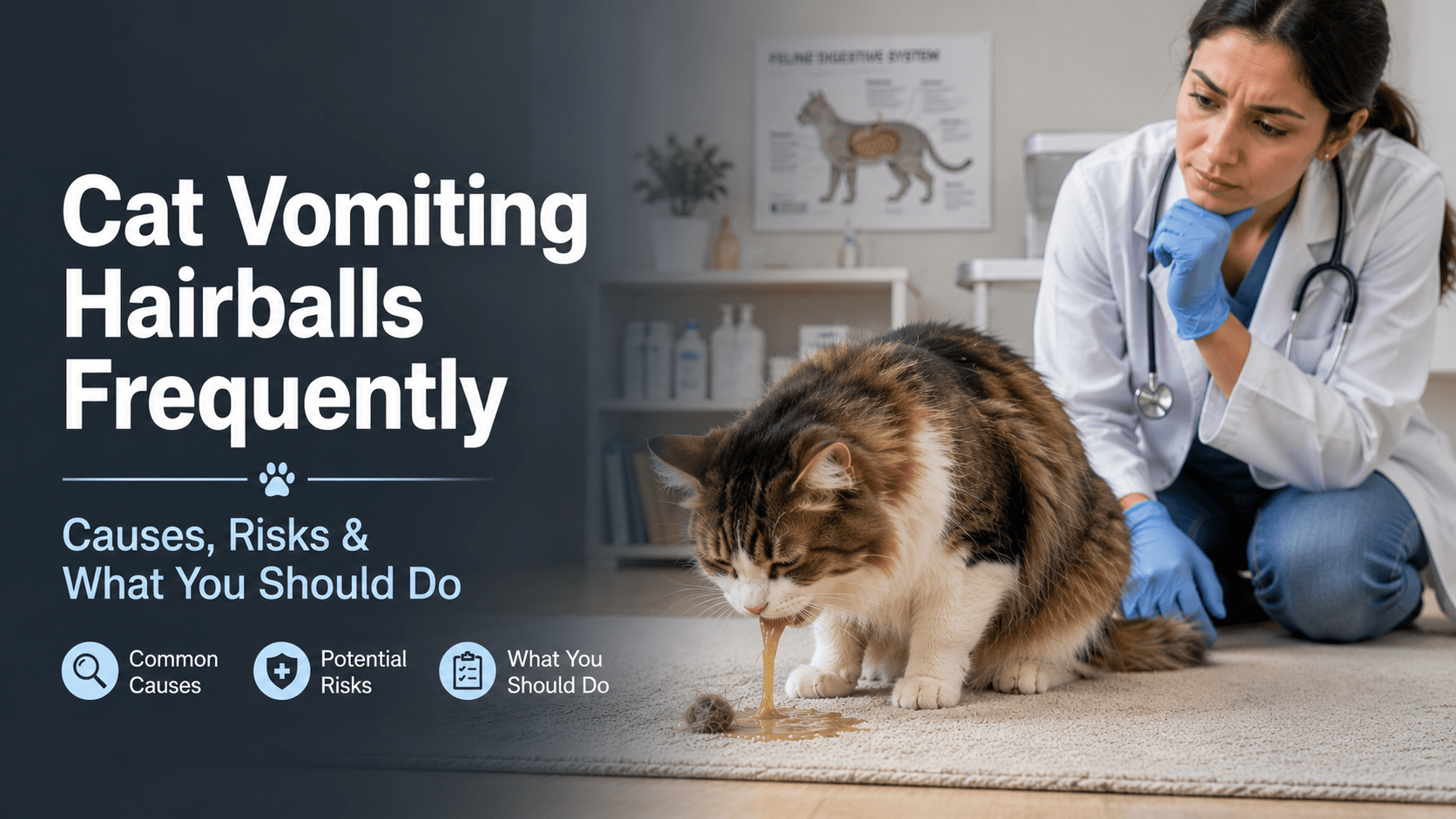
If your cat is vomiting hairballs frequently, it usually means excess hair is accumulating in the digestive tract and being expelled through vomiting. While occasional hairballs are normal, frequent episodes can signal underlying digestive issues, excessive grooming, or health problems that require veterinary attention.
What Does It Mean When a Cat Vomits Hairballs Frequently?
Cats naturally ingest hair while grooming. Normally, this hair passes through the digestive system. However, when it accumulates, it forms hairballs that are expelled through vomiting.
Mild Situations
- Seasonal shedding
- Long-haired breeds
- Occasional grooming-related hair intake
Serious Conditions
- Digestive motility disorders
- Skin disease causing over-grooming
- Intestinal blockage risk
- Nutritional deficiencies
Common Triggers
- Excessive grooming
- Stress or anxiety
- Flea or skin irritation
- Poor diet quality
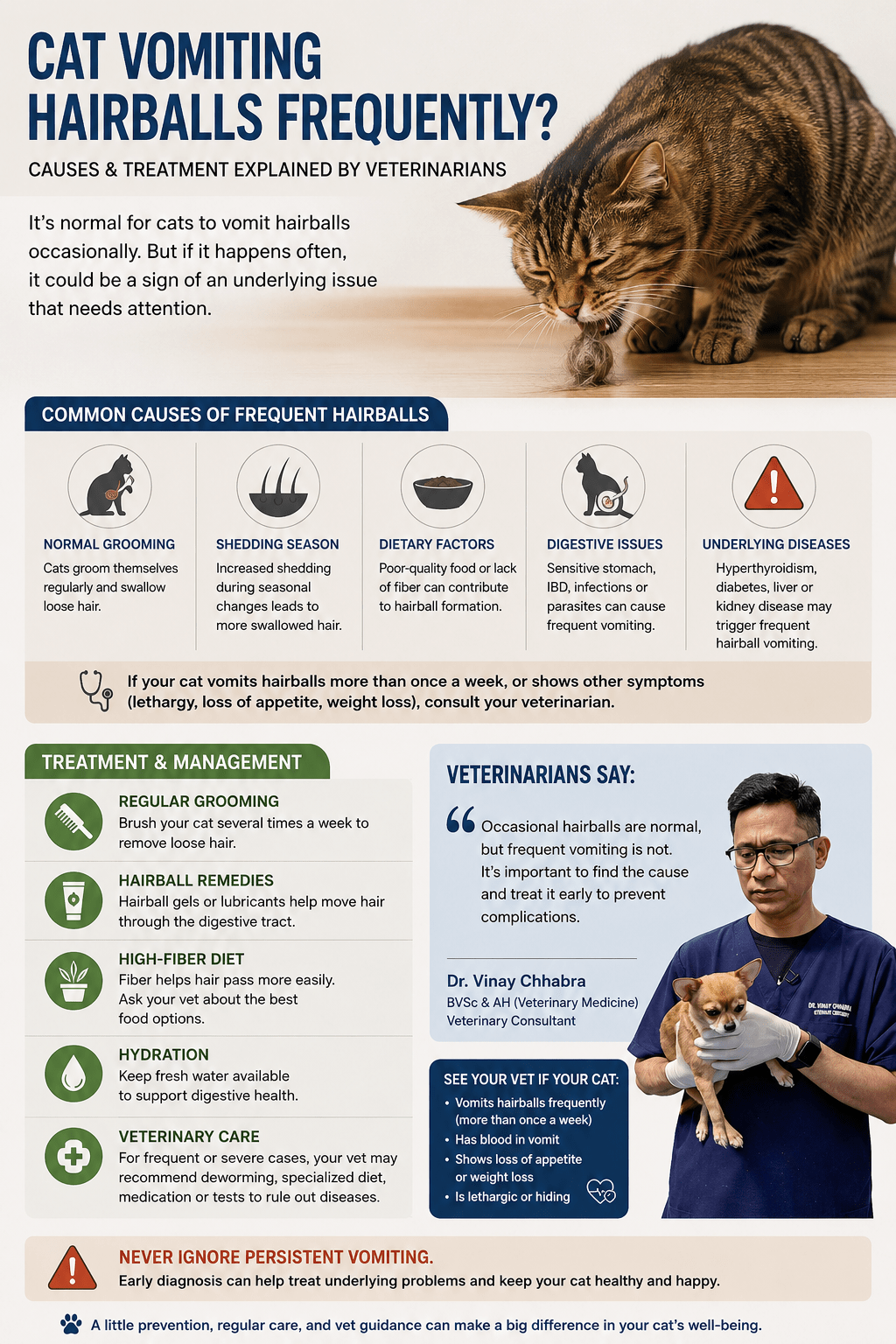
Common Causes
Common causes include:
- Excessive shedding
- Long or thick fur
- Over-grooming due to stress
- Flea infestations or skin allergies
- Digestive issues slowing hair passage
- Lack of fiber in diet
- Underlying gastrointestinal disease
How often is too often for a cat to vomit hairballs?
More than once a week is considered frequent and may need veterinary evaluation.
Why is my cat vomiting hairballs every day?
This could indicate excessive grooming, digestive issues, or skin irritation.
My cat is gagging but no hairball comes out—what does it mean?
This may indicate a blockage or unsuccessful hairball expulsion, which can be serious.
Why is my cat vomiting hairballs and not eating?
This could signal gastrointestinal distress or obstruction and needs urgent attention.
Are hairballs dangerous for cats?
Occasionally no, but frequent hairballs can lead to serious complications.
Why is my indoor cat getting more hairballs?
Indoor cats may groom more due to boredom or stress.
When Is This an Emergency?
- Repeated vomiting without producing a hairball
- Loss of appetite
- Lethargy or weakness
- Constipation or no stool
- Signs of abdominal pain
- Hairball frequency increasing rapidly
These signs may indicate a blockage or serious condition—seek veterinary care immediately.
Home Care Tips for Mild Cases
- Brush your cat daily to reduce loose hair
- Provide a high-fiber diet
- Use vet-approved hairball remedies
- Encourage hydration
- Reduce stress and boredom
How Veterinarians Diagnose the Problem
Veterinarians may perform:
- Physical examination
- Diet and grooming history review
- X-rays to check for blockages
- Ultrasound if needed
- Blood tests to rule out underlying disease
Diagnosis helps differentiate simple hairballs from serious gastrointestinal conditions.
Prevention Tips
- Regular grooming and brushing
- Balanced, fiber-rich diet
- Hairball control cat food
- Flea prevention
- Environmental enrichment to reduce stress
Talk to a Vet Online – Get Expert Help
If your cat is vomiting hairballs frequently, don’t ignore the pattern—it may indicate a deeper issue.
MyFurries veterinarians are available for online consultations to assess symptoms and guide treatment.
Related Pet Health Guides
Frequently Asked Questions
Are frequent hairballs normal in cats?
No, frequent hairballs may indicate a health issue.
How can I reduce hairballs in my cat?
Regular brushing and a fiber-rich diet help significantly.
Can hairballs cause blockage?
Yes, in severe cases they can cause intestinal obstruction.
Should I give hairball gel daily?
Only as recommended by a veterinarian.
Do long-haired cats get more hairballs?
Yes, they are more prone due to increased hair ingestion.
When should I see a vet?
If hairballs occur more than once a week or symptoms worsen.
Author & Review
Reviewed by Dr. Vinay Chhabra
Chief Veterinary Officer – MyFurries